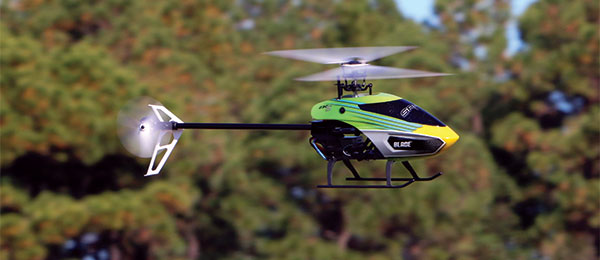
Blade Revolution 235 CP Guide
A comprehensive analysis of design updates, version variants, technical specifications, and community flight experiences.
1. Introduction & Background
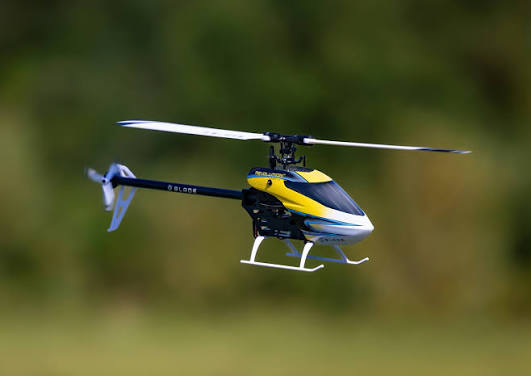
For nearly a decade, the Blade 230 S series served as the definitive entry point for pilots learning Collective Pitch (CP) helicopter flight[cite: 2]. Building upon that legacy, the Blade Revolution 235 CP introduces a series of factory updates and structural enhancements designed to improve durability, precision, self-leveling performance, and overall power[cite: 2]. Released in early 2025, the 235 CP bridges the gap between gentle trainer characteristics and aggressive sport/3D capability[cite: 2].
2. Key Upgrades Over the Blade 230 S
While sharing a familiar lineage, the Revolution 235 CP incorporates several major engineering refinements over its predecessor[cite: 2]:
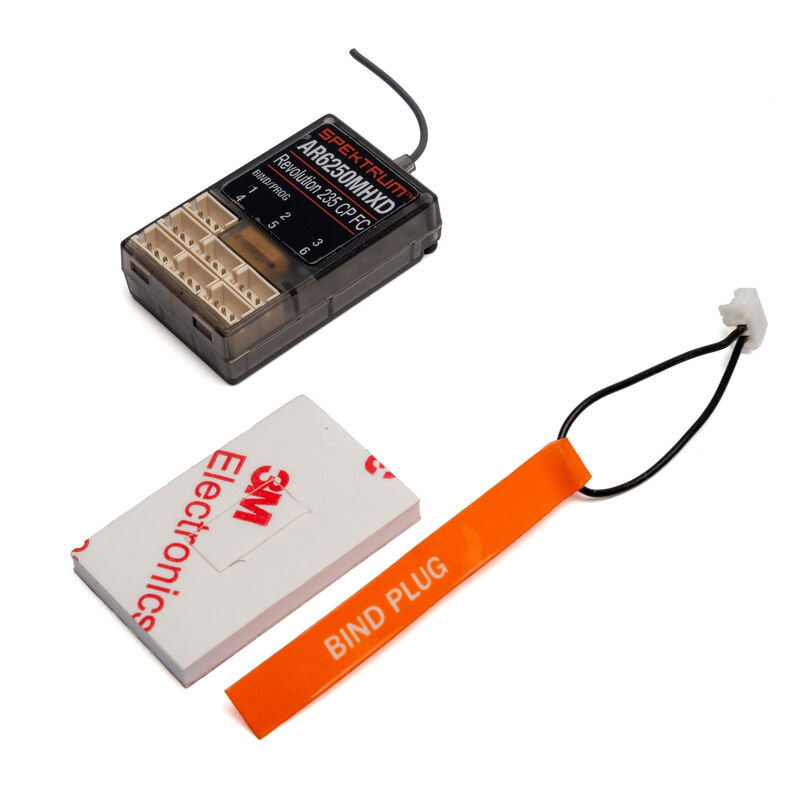
- Flight Controller & Tuning: Equipped with an upgraded factory-tuned AR6250MHXD flybarless controller featuring improved self-leveling performance when switching back to Normal (SAFE) mode[cite: 2].
- Rotor Head & Swashplate: Features an aluminum swashplate and rotor head block, paired with redesigned leading-edge control blade grips (transitioning from trailing-edge design) for sharper cyclic and collective response[cite: 2]. Blade grip nut slots now include hex retainers on both top and bottom[cite: 2].
- Frame & Servo Geometry: An updated frame design optimizes servo layout and center of gravity (CG)[cite: 2]. New digital metal-geared cyclic servos deliver increased precision[cite: 2].
- Tail System: Upgraded with a larger-diameter tail boom to provide significantly greater rigidity and durability under flight loads[cite: 2].
- Power System: Powered by a more efficient 3400Kv brushless outrunner main motor and a 3600Kv tail motor tied to a Spektrum Dual Smart ESC[cite: 2].
3. Specifications Overview
| Specification | Metric / Imperial Value |
|---|---|
| Main Rotor Diameter | 21.93 in (557 mm)[cite: 2] |
| Main Rotor Blade Length | 9.25 in (235 mm)[cite: 2] |
| Tail Rotor Diameter | 1.65 in (42 mm)[cite: 2] |
| Overall Dimensions (L x H x W) | 18.5 x 6.6 x 3.5 in (470 x 168 x 88 mm)[cite: 2] |
| Flying Weight (with recommended battery) | 14.29 oz (450 g)[cite: 2] |
| Main Motor / Tail Motor | 3400Kv Main (SPMX-1083) / 3600Kv Tail (BLH1515)[cite: 2] |
| Recommended Power Source | 3S 11.1V 850mAh Smart LiPo with IC2 connector[cite: 2] |
4. Completion Levels & Transmitter Integration
The aircraft is distributed in two primary configurations to suit different pilot requirements:
- RTF Basic Version: Includes a factory-bound Spektrum DXS 2.4GHz transmitter (DSMX) and all necessary components except a LiPo battery and charger[cite: 2]. Due to regulatory weight thresholds (over 250g), full RTF bundles were split into RTF Basic variants so pilots can select compatible Powerstage bundles (such as the S120 charger and 3S 850mAh Smart G2 battery)[cite: 2].
- BNF Basic Version: Ships fully assembled with power systems, servos, and receiver installed, allowing pilots to bind their own programmable 6+ channel Spektrum DSMX/DSM2 transmitter[cite: 2]. Includes a Smart Transmitter File (STF) that auto-imports settings for NX and iX series transmitters during binding[cite: 2].
5. Flight Modes & Safety Technologies
Exclusive Spektrum AS3X and SAFE (Sensor Assisted Flight Envelope) technologies provide built-in safeguards and flexible progression modes[cite: 2]:
- Normal (SAFE) Mode: Imposes bank and pitch angle limits to prevent over-control[cite: 2]. Automatically self-levels the helicopter when sticks are released, making takeoffs, landings, and hovering intuitive[cite: 2].
- Stunt / Idle Up 1 & 2 (AS3X) Modes: Removes all angle limits and increases head speed to permit full inverted flight, loops, rolls, stall turns, and aggressive 3D maneuvers[cite: 2].
- Panic Recovery: Pressing and holding the assigned switch immediately rights the aircraft into level upright flight from disoriented or inverted attitudes[cite: 2].
6. Community Insights, Tuning, and Maintenance
Pilots sharing initial flight logs and setup experiences highlight several practical tips:
- Tail Wag Troubleshooting: If minor wind-induced tail oscillation occurs, pilots have successfully fine-tuned stability using Forward Programming by adjusting damping parameters (such as increasing D-gain or slightly reducing P/I gains)[cite: 2].
- Gear Noise Management: Straight-cut main gears can generate mechanical noise during operation; applying graphite powder or a light aerosol lubricant (like CRC drilube) helps quiet gear mesh over time[cite: 2].
- Smart Transmitter File Notes: When importing or reviewing preset throttle curves, ensure all points are verified in your transmitter programming to prevent unexpected curve flattenings[cite: 2].
- Parts Compatibility: While optional metal blade grips and certain components cross over from older Blade platforms, the frame, larger tail boom, and new 3-servo assembly are distinct to the 235 CP, making it best treated as an independent model rather than a piecemeal upgrade[cite: 2].