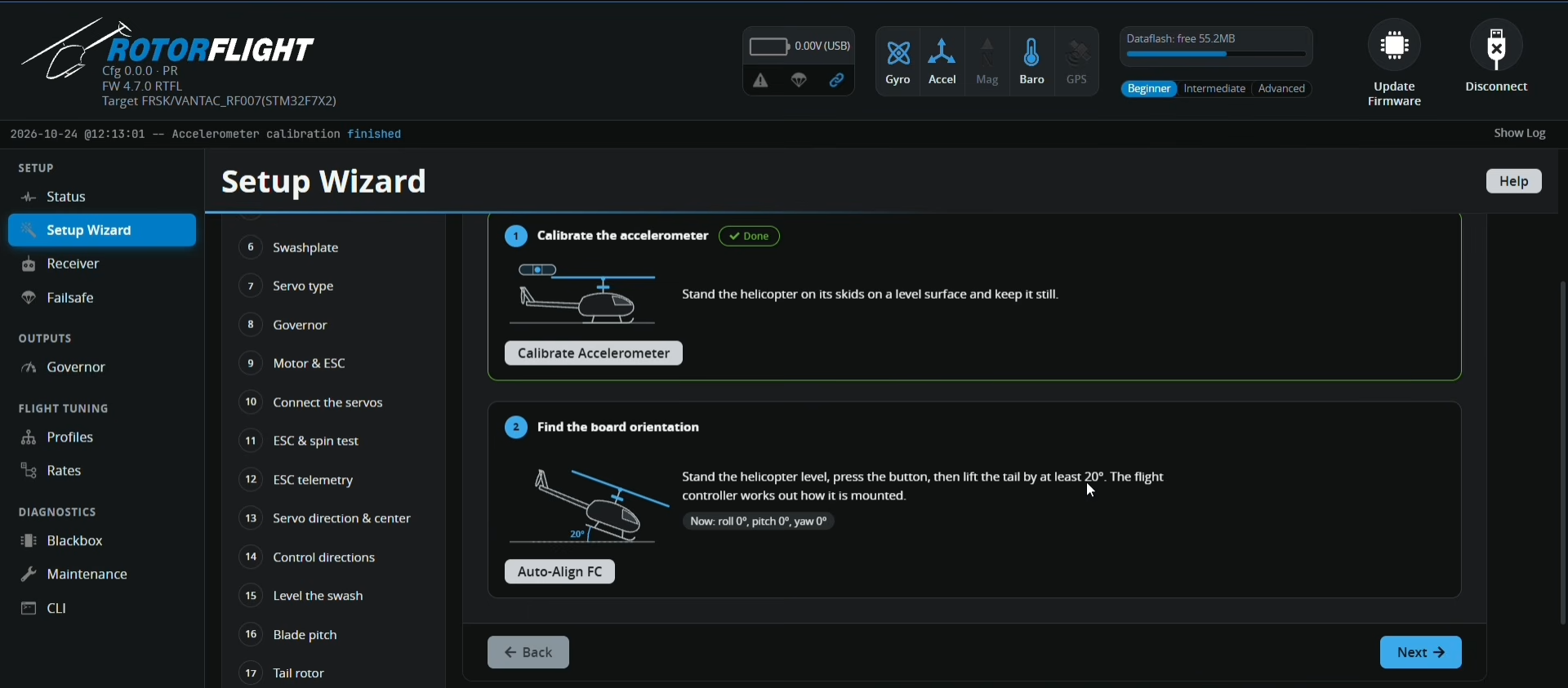
RadioMaster Flybarless Evolution: Difference between Nexus vs. Nexus-X vs. Nexus-XR
RadioMaster's line of helicopter flybarless (FBL) flight controllers has evolved significantly from the original Nexus design to the updated Nexus-X and the all-in-one Nexus-XR. Built around the Rotorflight ecosystem, these units cater to different wiring preferences, telemetry demands, and receiver setups.
Key Generations & Evolution

- RadioMaster Nexus (Original): The baseline unit built on Rotorflight 2.0. It introduced a rugged CNC aluminum case, solid vibration damping, and 128Mb of black box logging, requiring external receivers like the plug-and-play RP3-H.
- RadioMaster Nexus-X: An upgraded iteration optimized for Rotorflight 2.2. It doubles the black box logging memory to 256MB, features a refined housing layout, enhances power management and external voltage telemetry support (up to 70V), and preserves external receiver modularity (such as the RP3-H).
- RadioMaster Nexus-XR: The flagship variant that takes the hardware upgrades of the Nexus-X and fully integrates a dual-transceiver ExpressLRS receiver (RP4TD-M architecture with dual Semtech SX1281 chips) directly onto the board. This eliminates the need for any external receiver wiring.
Quick Selection Summary: Choose the Nexus if you find legacy deals; choose the Nexus-X if you prefer choosing and mounting your own external receiver (like ELRS or traditional serial protocols); choose the Nexus-XR if you want a streamlined, clean setup with built-in true-diversity ExpressLRS hardware straight out of the box.
Comparison Table
| Feature / Spec | Nexus (Original) | Nexus-X | Nexus-XR |
|---|---|---|---|
| Rotorflight Firmware | Optimized for Rotorflight 2.0 | Optimized for Rotorflight 2.2 | Optimized for Rotorflight 2.2 |
| Integrated Receiver | None (Requires external receiver) | None (Supports plug-and-play external like RP3-H) | Built-in ExpressLRS (Dual SX1281 / RP4TD-M True Diversity) |
| Black Box Flash Memory | 128Mb | 256MB | 256MB |
| Microcontroller (MCU) | STM32F722RET6 | STM32F722RET6 | STM32F722 |
| Gyro / IMU | ICM-42688-P | ICM42688P | ICM42688P |
| External Voltage Input | Standard range (5V - 12.6V system supply) | Up to 70V telemetry input support | Up to 70V telemetry input support |
| Enclosure | CNC Aluminum Case | Sleeker CNC Aluminum Case | Sleeker CNC Aluminum Case |
How Nexus is "Optimized for Rotorflight 2.2"
RadioMaster explicitly lists "Optimized for Rotorflight 2.2" as a primary feature to highlight that the board layout, default target configurations, hardware filters, and telemetry handling are natively mapped to take advantage of the architectural updates introduced in the Rotorflight 2.2 firmware generation (as opposed to the original Nexus, which shipped alongside the earlier Rotorflight 2.0 ecosystem).
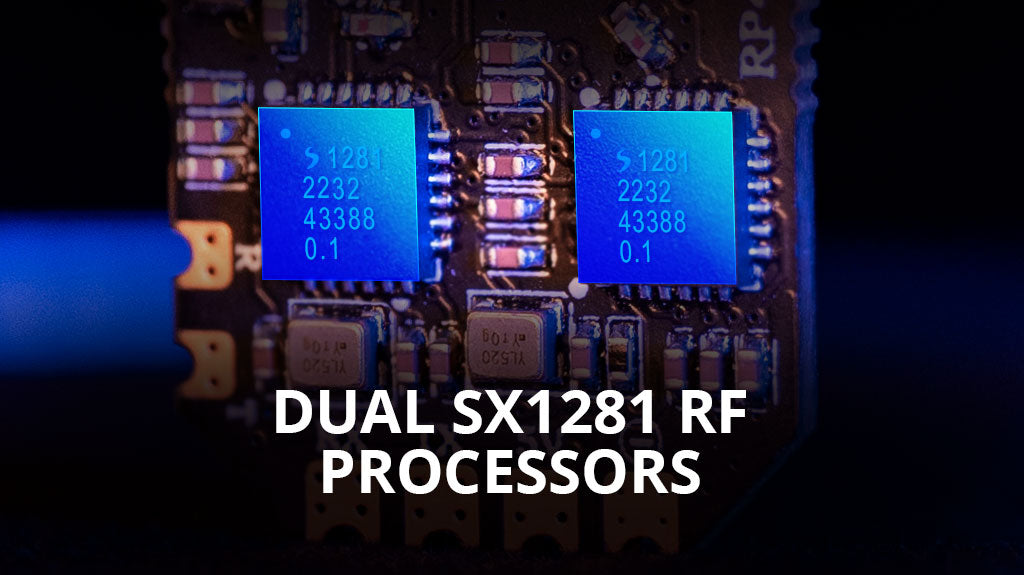
Dual SX1281 / RP4TD-M True Diversity
The phrase "Dual SX1281 / RP4TD-M True Diversity" describes the integrated hardware architecture powering the built-in ExpressLRS receiver on the RadioMaster Nexus-XR. Technical Breakdown of the ArchitectureDual SX1281 RF Chips (SX1281 x 2):Instead of a single radio receiver chip, the board uses two discrete Semtech SX1281 2.4GHz RF transceiver chips. This is the physical foundation of ExpressLRS Gemini / True Diversity technology.
Each chip can independently process RF packets, allowing the system to actively listen on different frequencies or seamlessly choose the cleanest signal path in real time. RP4TD-M Design Standard:The RP4TD-M designation refers to RadioMaster's miniaturized layout blueprint (derived from their standalone race/micro receivers).
It integrates an onboard ESP32 secondary microcontroller specifically dedicated to managing the dual-radio stack, Wi-Fi configuration/updates, and communication with the main flight controller via the CRSF (Crossfire) protocol.True Diversity (Spatial & Signal Diversity):Traditional antenna diversity switches between two antennas connected to a single receiver chip. True Diversity means you have two completely independent receiver chains backed by dual chips and dual 65mm T-antennas. This eliminates signal nulls, heavily mitigates fading, and offers superior protection against multipath interference during aggressive low-altitude maneuvers or high-speed FPV helicopter flight.
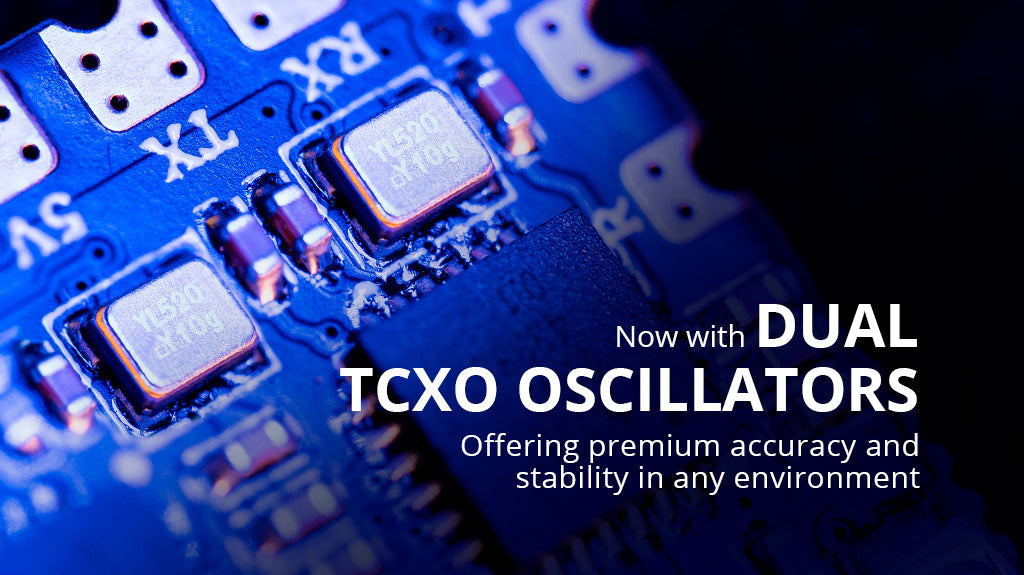
Additional Integrated Features:Built-in TCXO (Temperature Compensated Crystal Oscillator): Drastically reduces frequency drift caused by ambient temperature shifts or heavy heat soak from nearby electronics, locking the link stability in place. Refresh Rates: Supports high-speed packet rates up to 500Hz / F1000Hz for ultra-low control latency. Telemetry Output: Provides up to $2 \times 10\text{mW}$ RF telemetry power output back to your transmitter.