
Bridging the Simulator Gap: Why RC Sims Feel Unrealistic (And How to Actually Train Like a Pro)
Talk to a dozen RC helicopter and airplane pilots, and many will tell you the same thing: "Simulators just don't feel like real life." Because virtual physics, lack of G-force feedback, and zero real-world financial risk make sim flying feel like a video game, countless hobbyists abandon their simulators entirely or treat them as casual toys rather than professional training tools. However, overcoming the simulator gap requires shifting your methodology. By adjusting physics speeds, environmental turbulence, and training discipline, the simulator transforms into the most powerful tool in your aviation arsenal.
Why Simulators Feel Unrealistic to Pilots
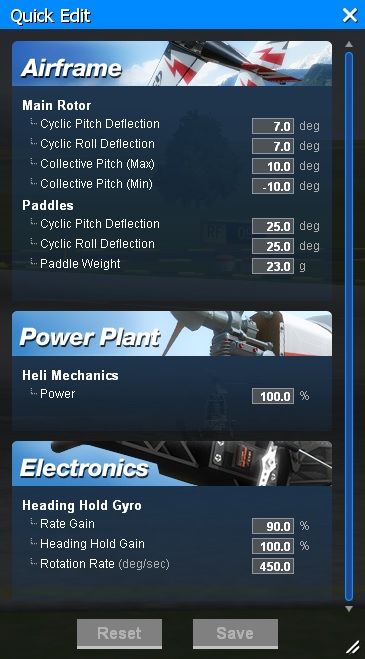
When pilots complain that a simulator feels "floaty" or "robotic," they are usually flying a default profile straight out of the box. Default sim models often feature unrealistically high power-to-weight ratios, zero latency, and dead-calm atmospheric conditions that never exist at an actual airfield.
Furthermore, human psychology treats a monitor differently than an expensive carbon-fiber airframe hovering 50 feet away. Without the genuine adrenaline and fear of a crash, pilots fly recklessly on the sim, fail to track orientation properly, and miss the opportunity to build precise, subconscious muscle memory. To fix this, you must trick your brain and tune the software to mirror reality.
Essential references for flight physics, neural skill acquisition, and stick-input latency reduction.
Dialing In Realistic Physics & Wind Profiles
To bridge the gap between simulation and the flight line, you must aggressively customize your simulator settings rather than accepting factory defaults:
| Simulation Parameter | Default Setting Issue | The Realistic Correction |
|---|---|---|
| Physics Speed | Standard 100% speed feels sluggish or overly forgiving. | Slightly speed up physics or match exact collective pitch load curves of your actual 550 or 700-class model. |
| Wind & Turbulence | Dead calm air with zero atmospheric disturbance. | Add 8–12 mph crosswinds, gust variations, and rotor-wash turbulence to force active cyclic compensation. |
| Roll & Flip Rates | Excessive, twitchy rates that look like science fiction. | Program your exact transmitter rates, Expo settings, and maximum degrees-per-second rotation limits. |
| Visual Perspective | Flying too close to the virtual model on screen. | Zoom out and position the virtual camera high up, forcing yourself to track orientation at true IRL distances. |
The Power of Micro-Sessions & Commercial Drills
Many pilots fail on the simulator because they try to cram a grueling 1-hour session into once a week, leading to mental fatigue and frustration. Consistency beats marathon cramming every single time.
-
The 3-to-5 Minute Rule:
Commit to just 3 to 5 minutes of focused stick time every single day. Short daily intervals lock in muscle memory much faster than sporadic weekly sessions.
-
Commercial Break Drills:
Keep your transmitter plugged in next to the couch. During TV commercial breaks, fire up the sim and run precisely three consecutive flawless autorotations or figure-8s.
-
High-Altitude Discipline:
Never practice low-deck maneuvers on the sim if you wouldn't risk them low IRL. Keep your virtual aircraft high in the sky to train proper orientation tracking and smooth geometry.
-
Match Your Hangar:
Select a virtual airframe model that closely mirrors the weight, disc loading, and power of the exact helicopter or plane you plan to fly this weekend.
The Repetition Equation: 300 Reps to IRL Muscle Memory
A common misconception is that 100 simulator repetitions equal one attempt in real life. In reality, neurological motor-skill acquisition—especially for complex 3D maneuvers or orientation recovery—requires a minimum of 250 to 300 pristine repetitions before the brain hardcodes the sequence into subconscious reflex.
Furthermore, neuroplasticity changes as we age; adult brains require cleaner, more deliberate repetition loops to override ingrained panic responses. If you execute a maneuver poorly on the sim 10 times in a row, you are merely training bad habits. Every single repetition must be intentional, precise, and executed with zero deviation.
Purpose-Driven Training vs. Video Game Syndrome
The biggest reason pilots burn out on simulators is "Video Game Syndrome"—mindlessly punching sticks, crashing, hitting reset, and repeating without a goal. To make sim time productive, treat it like an engineering simulation:
Never open the sim just to "fly around." Pick one or two specific maneuvers—such as correcting a crosswind drift on final approach or tightening a piro-flip—that you plan to execute with your actual model on the upcoming weekend.
Treat every virtual crash as if it cost you a $200 carbon-fiber blade set. If you crash, force yourself to analyze what stick input caused the failure before hitting reset.