
High-Voltage Brushless Helicopter Tail & Cyclic Servo Shootout: MKS, Theta, Torq & Xpert Comparison
Selecting the right servo lineup is one of the most consequential hardware decisions an RC helicopter builder can make. While modern flybarless (FBL) controllers like Rotorflight, iKON, and VBar execute thousands of stabilization calculations per second, their authority is strictly limited by the physical speed, centering accuracy, and holding torque of your actuators. This technical comparison evaluates 10 leading high-voltage (HV) and super-high-voltage (SHV) brushless servos from MKS, Theta, Torq, and Xpert, alongside essential engineering guidance on servo electronics, tail rotor survivability, and mechanical linkage geometry.
The Evolution of Modern Servo Electronics
Over the past decade, standard-size RC servos have undergone a complete architectural overhaul. What used to be simple brushed motors paired with analog potentiometers and basic transistor bridges have evolved into miniature, high-frequency robotic actuators:
- Brushless Motor Architecture: Replacing traditional coreless brushed motors with three-phase brushless DC motors eliminates physical brush friction and commutator arcing. This delivers dramatically higher transit speeds, instant torque response, vastly improved thermal efficiency, and nearly infinite motor service life under continuous 3D flight loads.
- Contactless Magnetic Encoders vs. Potentiometers: Traditional carbon-track potentiometers rely on physical wiper contact, which eventually wears down from constant micro-vibrations—causing deadband drift and "jitter" around center. Modern high-end servos (such as the Torq HLX and Theta Razor series) replace mechanical wipers with contactless Hall-effect magnetic encoders and 12-bit (4096-step) resolution sensors, ensuring zero wear and razor-sharp centering accuracy flight after flight.
- Integrated Mini-ESCs & 32-Bit Microcontrollers: Inside every modern digital brushless servo sits a dedicated miniature three-phase ESC driven by an ARM or high-speed microcontroller. These internal controllers process narrow-band 760us pulses at refresh rates up to 560Hz–1000Hz, manage closed-loop PID braking to prevent overshoot, and support direct field programming (such as Theta's Android NFC tuning or Torq's TBOX programmer).
Why the Tail Servo is Your Primary Lifeline
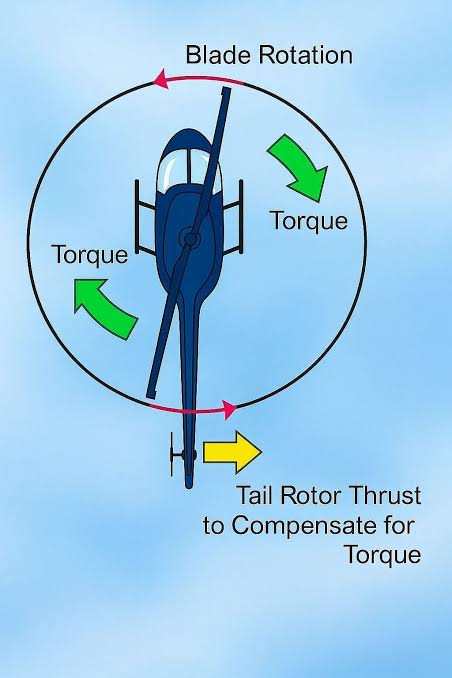
If a cyclic servo experiences slight gear slop or a momentary slowdown, a skilled pilot can often compensate and land safely. If you lose tail authority, you lose orientation—and an unrecoverable crash is almost inevitable.
Unlike cyclic servos that move primarily during pilot stick inputs, the tail rotor servo works non-stop at maximum frequency from spool-up to touchdown. Every time you punch collective pitch, execute a tic-toc, or fly into a gusting crosswind, main rotor torque fluctuates violently. The tail servo must react within milliseconds (0.03s to 0.045s per 60 degrees) to adjust tail blade pitch and arrest yaw rotation. If a tail servo stalls under aerodynamic blowback, overheats, or strips a gear mid-flight, the helicopter immediately enters an uncontrollable high-speed pirouette, making nose/tail orientation impossible to read before impact.
Linkage Ball Radius & Mechanical Geometry
A common mistake among builders is mounting the linkage ball on the outermost hole of the servo horn to maximize mechanical throw, ignoring the manufacturer's specified distance from the servo spline center. Following the exact manual distance (typically 10.5mm to 13.5mm for tail servos and 16mm to 20mm for cyclic servos) is critical for three mechanical reasons:
-
Preserving Mechanical Advantage & Torque:
Servo torque is rated at 1 cm (10mm) from the output shaft center. Moving the linkage ball out from 12mm to 18mm reduces your effective holding torque by 33% while increasing the leverage that aerodynamic blowback exerts against the servo gears.
-
Maximizing FBL Resolution:
When the ball is mounted too far out, the flybarless controller must artificially dial down travel limits in software (often below 50–60%). This wastes half of the servo's physical 4096-step resolution, resulting in coarser tail hold and lower gyro gain ceilings before tail wag occurs.
-
Preventing Linear Binding & Deadband:
The manufacturer's specified radius ensures the linkage pushrod operates within the optimal linear arc of the servo's rotation (roughly ±45 degrees), preventing mechanical binding at full pitch deflection.
10-Full Sized Tail Servo Technical Specifications Matrix
The table below compares all 10 high-voltage brushless servos across operating voltage range, physical weight, retail price, transit speed (sec/60°), and stall torque. Note: Verify neutral pulse width (760us narrow-band vs. 1520us standard) before connecting to your FBL controller.
| Servo Model | Primary Role | Operating Voltage | Weight | Price | Speed (sec/60°) | Torque |
|---|---|---|---|---|---|---|
| MKS HBL550 X5 | Cyclic / Heavy Tail (1520us) | 5.0V – 8.4V | 79.5g | $126 | 0.117s @ 6.0V 0.094s @ 7.4V 0.085s @ 8.4V |
29.0 kg-cm (402 oz-in) @ 6.0V 36.0 kg-cm (499 oz-in) @ 7.4V 38.0 kg-cm (527 oz-in) @ 8.4V |
| Theta Razor-T1 NFC | Tail / Cyclic (760us / 1520us) | 5.0V – 8.4V | 73.0g | $133 | 0.054s @ 6.0V 0.047s @ 7.4V 0.042s @ 8.4V |
18.0 kg-cm (250 oz-in) @ 6.0V 19.0 kg-cm (264 oz-in) @ 7.4V 20.0 kg-cm (278 oz-in) @ 8.4V |
| Theta Razor THL782 Kenny Ko | Dedicated Tail (760us) | 5.0V – 8.4V | 73.0g | $144 | 0.057s @ 6.0V 0.050s @ 7.4V 0.045s @ 8.4V |
12.0 kg-cm (167 oz-in) @ 6.0V 14.0 kg-cm (194 oz-in) @ 7.4V 16.0 kg-cm (222 oz-in) @ 8.4V |
| Theta Razor THL782H Kenny Ko | Dedicated SHV Tail (760us) | 7.5V – 12.6V (3S LiPo) | 73.0g | $150 | 0.065s @ 7.5V 0.057s @ 9.0V 0.050s @ 11.1V 0.045s @ 12.6V |
12.0 kg-cm (167 oz-in) @ 7.5V 14.0 kg-cm (194 oz-in) @ 9.0V 17.0 kg-cm (236 oz-in) @ 11.1V 19.0 kg-cm (264 oz-in) @ 12.6V |
| Torq BLS0704T-Black Edition | Dedicated Tail (760us) | 6.0V – 8.4V | 78.0g | $75 | 0.045s @ 6.0V 0.040s @ 7.4V 0.035s @ 8.4V |
6.0 kg-cm (83 oz-in) @ 6.0V 7.0 kg-cm (97 oz-in) @ 7.4V 8.0 kg-cm (111 oz-in) @ 8.4V |
| Torq BLS0704T | Dedicated Tail (760us) | 6.0V – 8.4V | 78.0g | $75 | 0.045s @ 6.0V 0.040s @ 7.4V 0.035s @ 8.4V |
6.0 kg-cm (83 oz-in) @ 6.0V 7.0 kg-cm (97 oz-in) @ 7.4V 8.0 kg-cm (111 oz-in) @ 8.4V |
| Torq BLS1604 SHV | Dedicated SHV Tail (760us) | 9.0V – 13.0V (3S LiPo) | 78.0g | $89 | 0.055s @ 9.0V 0.045s @ 12.0V 0.040s @ 13.0V |
14.0 kg-cm (194 oz-in) @ 9.0V 16.0 kg-cm (222 oz-in) @ 12.0V 17.0 kg-cm (236 oz-in) @ 13.0V |
| Torq HLX Black Edition Tail | Dedicated Tail (760us) | 6.0V – 8.4V | 80.0g | $127 | 0.040s @ 6.0V 0.035s @ 7.4V 0.030s @ 8.2V |
9.0 kg-cm (125 oz-in) @ 6.0V 11.0 kg-cm (153 oz-in) @ 7.4V 13.0 kg-cm (181 oz-in) @ 8.2V |
| Torq HLX Fullsize Cyclic | Cyclic (1520us / 760us) | 6.0V – 8.4V | 80.0g | $127 | 0.110s @ 6.0V 0.090s @ 7.4V 0.070s @ 8.2V |
24.0 kg-cm (333 oz-in) @ 6.0V 30.0 kg-cm (417 oz-in) @ 7.4V 35.0 kg-cm (486 oz-in) @ 8.2V |
| Xpert R2T Standard Tail | Dedicated Tail (760us) | 6.0V – 8.4V | 70.0g | $155 | 0.056s @ 6.0V 0.045s @ 7.4V 0.040s @ 8.4V |
12.0 kg-cm (167 oz-in) @ 6.0V 14.8 kg-cm (205 oz-in) @ 7.4V 16.8 kg-cm (233 oz-in) @ 8.4V |
Model-by-Model Engineering Breakdown
Delivering a massive 527 oz-in of torque at 8.4V, the HBL550 X5 is built for heavy-duty cyclic duty or high-load scale Fenestron tail assemblies where standard 760us tail servos lack raw holding force.
Features wireless Android NFC programming to customize PID loop response, acceleration, and sub-trim center points without pulling the servo horn. Selectable between 760us tail and 1520us cyclic modes.
Co-developed with world champion Kenny Ko. The standard THL782 runs on 2S HV (up to 8.4V), while the THL782H is engineered for direct 3S LiPo Super High Voltage (up to 12.6V) power buses for maximum tail authority.
Identical internal specs housed in either standard silver/black or stealth Black Edition CNC cases. At 0.035s transit speed and $75, they offer exceptional value for 550–700 class tail duties.
Designed specifically for 9.0V–13.0V direct 3S receiver battery setups, delivering 236 oz-in of tail torque at 0.040s without requiring a voltage step-down regulator.
Equipped with contactless Hall sensors and 6 ball bearings. The HLX Tail hits a blistering 0.030s @ 8.2V, while the matching HLX Cyclic provides 486 oz-in for synchronized swashplate precision.
The lightest servo in this lineup at 70g, featuring a quick-release detachable wire harness and 4096-step resolution up to 800Hz refresh rates.
Buyer's Guide: How to Choose the Right Servo from the Chart
With ten high-performance brushless servos spanning $75 to $155, selecting the right actuator comes down to matching your airframe size, power bus voltage, and flying style to the right internal technology. Use these four engineering criteria to narrow down the chart for your build:
-
Speed vs. Torque on the Tail Rotor (The Golden Rule):
For a dedicated helicopter tail servo, transit speed (0.030s to 0.045s/60°) is significantly more important than extreme stall torque—provided the servo meets a baseline torque threshold for your rotor disc size. A tail rotor rarely needs 30+ kg-cm of brute force, because excessive torque is useless if the servo arrives late to arrest a torque spike. For 550-to-700 class helicopters, aim for at least 8–12 kg-cm (110–165 oz-in) of torque paired with a transit speed faster than 0.045s (such as the Torq BLS0704T, Torq HLX Tail, or Theta THL782). Only prioritize massive torque (like the MKS HBL550 X5) when driving heavy scale Fenestron shrouded tails or cyclic swashplates.
-
Contactless Hall-Effect Sensors vs. Traditional Potentiometers:
If you fly aggressively or log hundreds of flights per season, prioritize servos equipped with magnetic Hall-effect position sensors (such as the Torq HLX series). Unlike mechanical carbon-track potentiometers that rely on physical wiper friction—and eventually develop center deadband or vibration jitter—Hall-effect encoders read magnetic field angles with zero physical contact, guaranteeing consistent centering over the life of the gear train.
-
Next-Gen Programmability & High-Frequency Protocols:
Modern flagship servos offer programmable internal control loops that let you fine-tune deadband, acceleration curves, and PID holding stiffness to match your FBL unit. For example, the Theta Razor-T1 NFC allows wireless tuning straight from an Android smartphone without disconnecting linkages, while servos supporting 760us narrow-band pulses at 560Hz–1000Hz (like the Theta THL782H and Xpert R2T) eliminate signal latency on modern Rotorflight and VBar setups.
-
Voltage Architecture (2S HV vs. Direct 3S SHV):
Check your ESC BEC or receiver battery output before ordering. Eight of the servos in the chart operate on standard 2S High Voltage (6.0V–8.4V). However, if you run a direct 3S LiPo receiver pack (11.1V–12.6V) to cut current draw and simplify wiring on a heavy 700/800-class machine, you must choose a dedicated Super High Voltage (SHV) actuator like the Theta THL782H or Torq BLS1604—plugging a standard 8.4V servo into a 12.6V bus will destroy its internal mini-ESC immediately.
Related Setup & Wiring Guides
-
FBL Servo Wiring Maps:
Verify port assignments and 760us tail channel setups across Rotorflight, iKON, and VBar controllers.
-
Servo Rail Voltage Stabilization:
Learn how to size low-ESR capacitors to prevent mid-air brown-outs under heavy 3D servo current spikes.
-
RCFlightPath Archives:
Explore our full library of helicopter setup dossiers, telemetry scripts, and mechanical tuning calculators.