Comprehensive Technical Guide to Micro-Pitch & Standard JST Connectors in Electronics & RC Systems
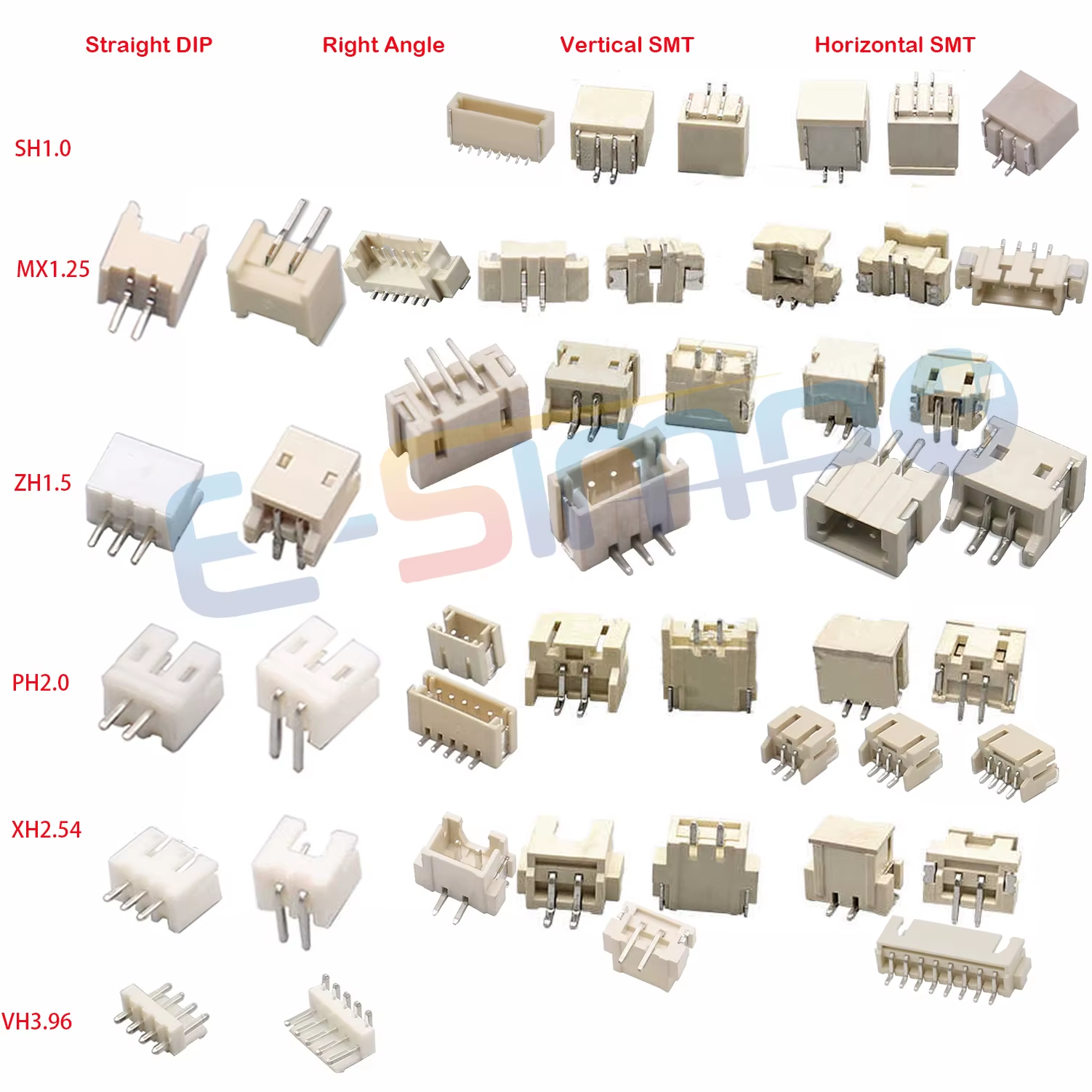
In electronics, robotics, FPV drones, and radio-controlled (RC) models, the term "JST" is frequently used as a blanket catch-all for small plastic wire-to-board and wire-to-wire connectors. Originally manufactured by Japan Solderless Terminal (JST), these connectors span multiple distinct families based on physical pitch (pin spacing), locking mechanisms, and current-handling limits. Grouping them all under the single name "JST" often leads to crossed wires, mismatched components, and damaged hardware.
This technical guide breaks down the most common micro-pitch and standard JST connector families-alongside related compact interconnects like Molex and Hirose-providing exact specifications, dimensions, and applications.
1. JST Series Quick-Reference Matrix
| Series Name | Pitch (Pin Spacing) | Current Rating | Voltage Rating | Wire Gauge (AWG) | Primary Applications |
|---|---|---|---|---|---|
| JST SH | 1.0 mm | 1.0A | 50V AC/DC | 28-32 | Ultra-compact FPV drone video transmitters, flight controller telemetry ports, wearables. |
| JST GH | 1.25 mm | 1.0A | 50V AC/DC | 28-32 | ArduPilot / Pixhawk flight controller standard ports, modern GPS modules. |
| Molex MX / Pico-Blade | 1.25 mm | 1.0A - 1.5A | 125V AC/DC | 28-32 | Compact electronics, battery balancing leads, micro drone power taps. |
| JST ZH | 1.5 mm | 1.0A | 50V AC/DC | 26-32 | Micro servos, compact camera modules, tight-space sensor boards. |
| JST PH | 2.0 mm | 2.0A | 100V AC/DC | 24-32 | Small LiPo battery balance leads, tiny RC receiver ports, indoor micro helicopter electronics. |
| JST XH | 2.5 mm | 3.0A | 250V AC/DC | 22-28 | Standard 2S-6S LiPo balance plugs, 3D printer thermistors/heaters, general DIY electronics. |
| Hirose DF61 | 2.2 mm | Up to 5.0A | 350V AC/DC | 22-30 | High-voltage/current compact internal battery and power connections. |
2. Detailed Breakdown of Individual Connector Types
JST SH Series (1.0 mm Pitch)
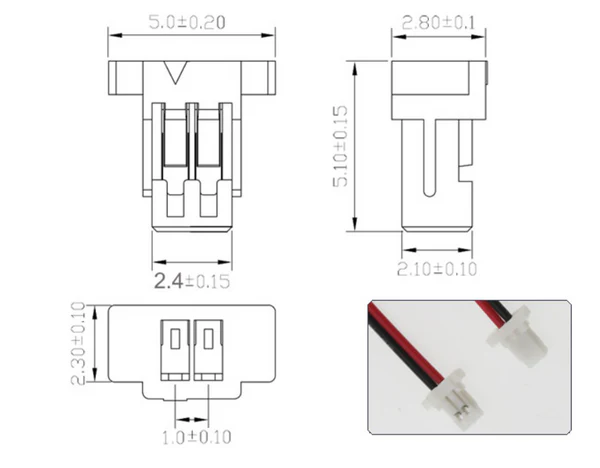
- Design & Features: The SH series is an ultra-low-profile, surface-mount wire-to-board connector. With a strict 1.0 mm pitch and low height above the PCB, it is engineered for extreme miniaturization. It features side-locking friction walls to prevent accidental disconnection under vibration.
- Electrical Specs: Rated for 1.0A AC/DC and 50V using fine 28 to 32 AWG wire.
- Common Use Cases: Modern FPV racing and cinematic drones use 4-pin to 8-pin SH connectors to link flight controllers to digital video systems (like DJI O3 Air Unit or Caddx Vista) and micro GPS modules.
JST GH Series (1.25 mm Pitch)
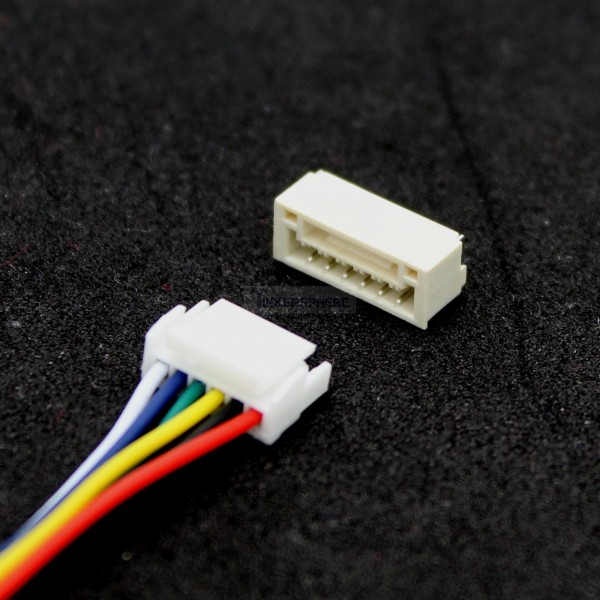
- Design & Features: A 1.25 mm pitch connector featuring a secure positive-locking friction mechanism with audible/tactile clicks. It bridges the gap between ultra-fine SH connectors and larger PH plugs.
- Electrical Specs: Rated for 1.0A and 50V AC/DC using 28-32 AWG wire.
- Common Use Cases: Adopted heavily by the open-source drone community (PX4, ArduPilot, Pixhawk standard flight controllers) for peripheral connections including compasses, digital airspeed sensors, and external telemetry radios.
Molex 1.25 mm (MX / Pico-Blade Style)
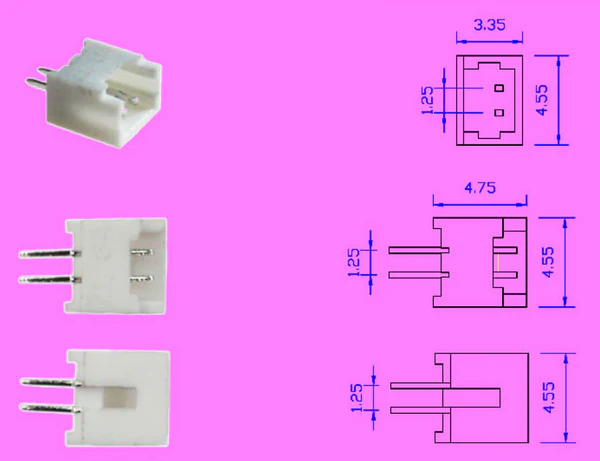
- Design & Features: Often visually confused with JST GH or JST-1.25 variants, Molex equivalents (such as the Pico-Blade series) feature a 1.25 mm pitch but utilize distinct latching windows and terminal geometry. They are strictly non-interchangeable with JST housings despite matching spacing.
- Electrical Specs: Handles up to 1.0A to 1.5A depending on wire gauge (28-32 AWG).
- Common Use Cases: Found in compact consumer electronics, tight-tolerance instrumentation, and specific mini drone flight controller power distributions.
JST ZH Series (1.5 mm Pitch)
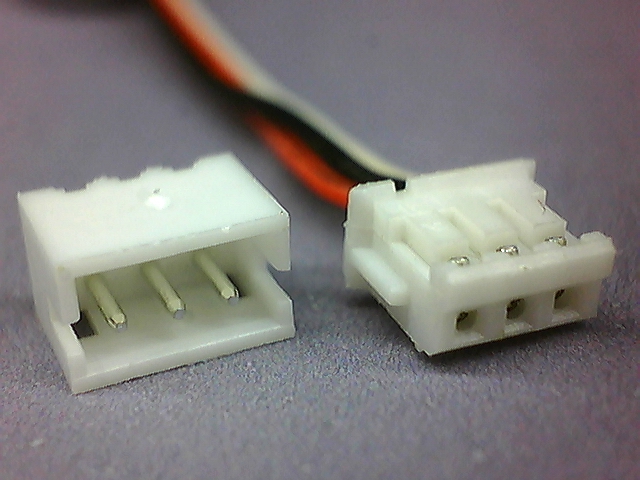
- Design & Features: A 1.5 mm pitch wire-to-board connector featuring a top-latch mechanism. It provides a more robust physical lock than friction-fit micro connectors while maintaining a low profile.
- Electrical Specs: Rated for 1.0A and 50V using 26-32 AWG wire.
- Common Use Cases: Micro digital servos, compact sensor boards, and internal interconnects within handheld measurement gear.
JST PH Series (2.0 mm Pitch)
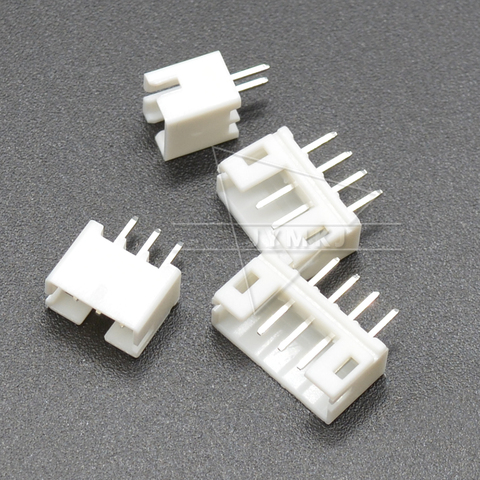
- Design & Features: One of the most common legacy and modern micro connectors. It features a 2.0 mm pitch, friction locking, and utilizes tin-plated brass contacts.
- Electrical Specs: Rated for 2.0A and 100V AC/DC using 24-32 AWG wire.
- Common Use Cases: Commonly found on ultra-micro RC helicopter and airplane receiver boards (e.g., Blade micro series), small 1S LiPo battery power leads, and low-current Arduino sensor modules.
JST XH Series (2.5 mm / 2.54 mm Pitch)
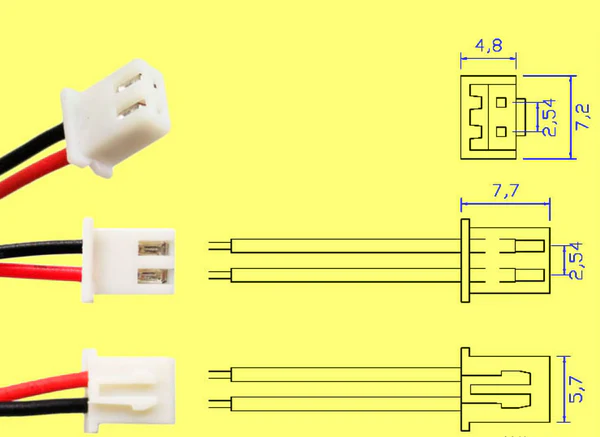
- Design & Features: Often casually referred to as "JST-2.54," the XH series has a true 2.5 mm pitch (though it is frequently cross-mated with 2.54mm Dupont headers with varying degrees of long-term reliability). It features deep friction walls and clear polarization ribs.
- Electrical Specs: Rated for 3.0A and 250V AC/DC using 22-28 AWG wire.
- Common Use Cases: Universally utilized as the **balance connector** on 2S through 6S LiPo battery packs. Also widely used in 3D printers for connecting heated beds, stepper motors, and thermistors.
Hirose DF61 Series (2.2 mm Pitch High-Performance Connector)
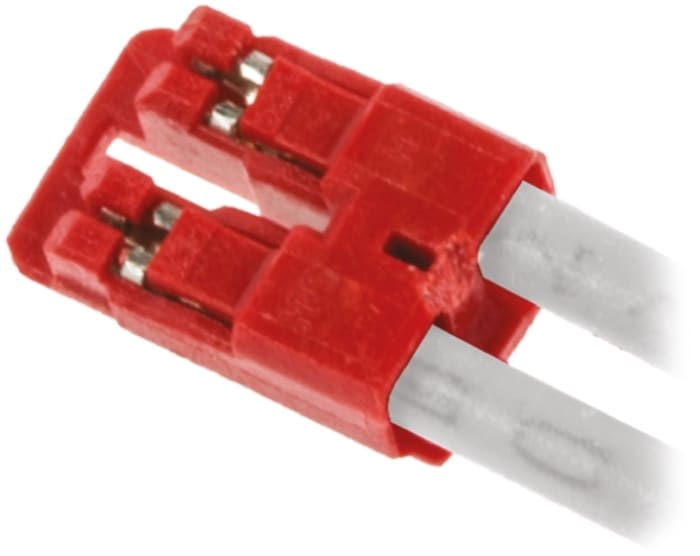
- Design & Features: Though manufactured by Hirose Electric rather than JST, the DF61 series frequently appears in high-performance RC and battery management systems. It features a low profile (2.0 mm mating height) on a 2.2 mm pitch, augmented by a robust **swing-lock double-locking mechanism** that physically locks the crimp socket into the header to prevent back-out under heavy vibration.
- Electrical Specs: Rated for up to **350V AC/DC** and high current up to **5.0A** (using 22 AWG wire).
- Common Use Cases: Internal power distribution, high-density battery packs, and industrial electronics requiring high voltage and current endurance within a confined vertical footprint.
3. Engineering Pitfalls & Best Practices
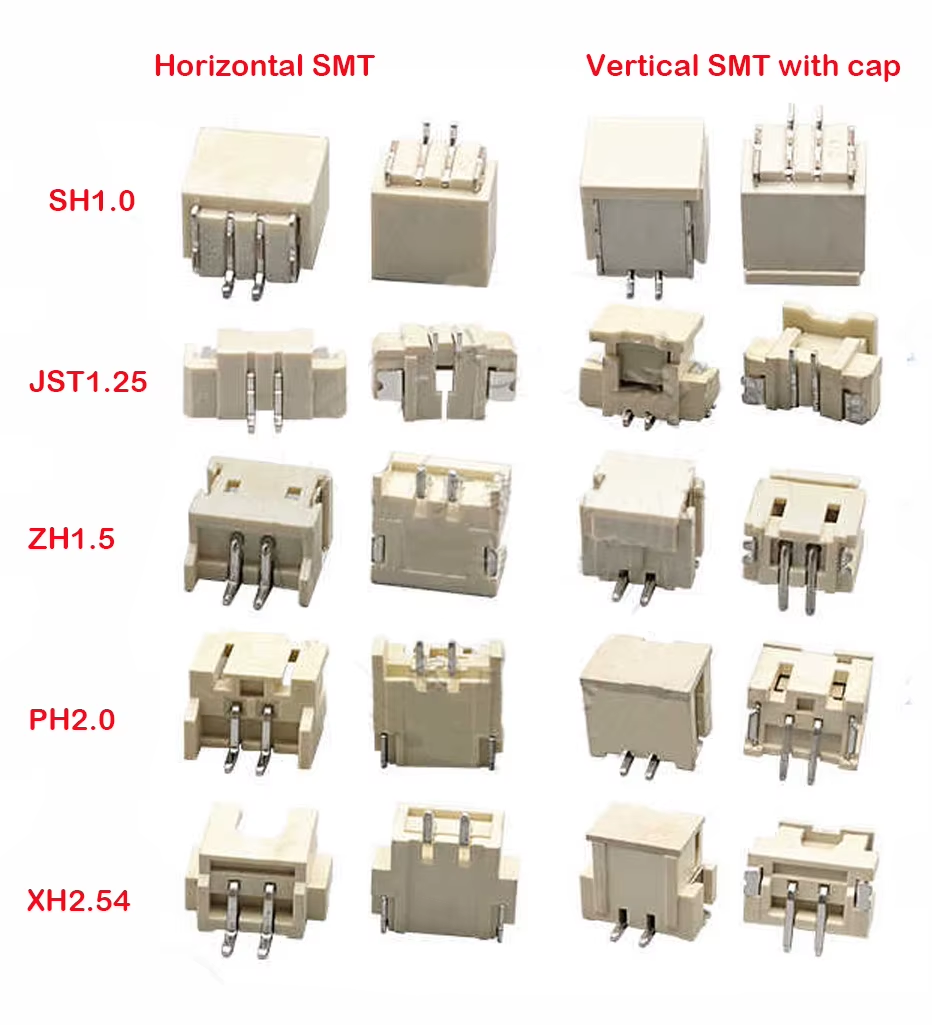
- Pitch Confusion: Never eyeball a micro connector. A 2.0 mm (PH) plug will look nearly identical to a 2.5 mm (XH) plug to the untrained eye, but forcing them together will bend pins or crack housings. Always use digital calipers to measure center-to-center pin spacing.
- Crimp Tooling: Micro-pitch connectors (SH, GH, ZH, PH) require specialized micro-crimping jaws (such as SN-01BM or IWS-3220M style crimpers). Hand-soldering wires directly into micro crimp pins without a proper tool usually creates oversized pins that will not snap into the plastic housing.
- Current Limits: Do not use JST-PH or JST-XH connectors for high-current motor loads. Pin resistance on micro pins generates localized heat under high loads, leading to terminal oxidation, voltage sag, and melted plastic housings. Reserve them strictly for signal lines, sensor data, low-power electronics, and LiPo balancing.