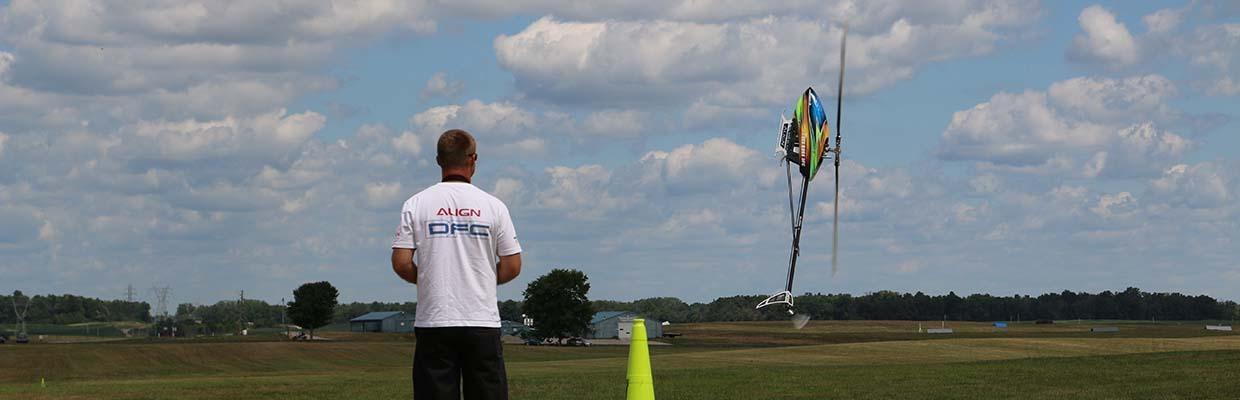
Align RC Helicopters, Rapid Product Cycles, and Versioning
Align Corporation (often just called Align RC) is a Taiwanese manufacturer that reshaped the RC helicopter world in the mid‑2000s. Their T‑Rex series became the default choice at many clubs, and for years Align pushed out new helicopters, new frames, and revised parts at a remarkable pace.
That speed brought two things:
- Innovation and availability – lots of models, lots of parts, and constant updates.
- Version confusion – frames, gears, rotor heads, and tail systems quietly changed between production runs, leaving pilots to discover differences themselves.
1. Brief history: how Align became “the” heli brand
Align entered the RC helicopter market in the early 2000s. A key milestone was the T‑Rex 450XL, launched around July 2004, which offered a relatively affordable, high‑performance electric heli at a time when many competitors were expensive or complex.
Through the late 2000s and 2010s, Align expanded the T‑Rex line:
- 450 class: 450X/XL → 450SE → 450 Sport → 450 Pro → 450 DFC → 450L Dominator.
- Mid‑size: 500 and 550 series.
- Large: 600, 700, and nitro variants (e.g., 700N).
Each step often brought new frames, heads, tail systems, and gears—sometimes with only subtle changes, but enough to make parts incompatible across versions. This “rolling revision” style is frequently discussed on forums like RC Groups and HeliFreak, where pilots compare part numbers and fitment across generations. (Inference based on forum discussions and parts guides.)
2. Rapid product cycles and “public testing”
Align’s pace meant that new helicopters and major redesigns appeared regularly: new head designs (DFC), new tail drive systems (belt vs torque tube), and new frame layouts. Many of these were solid improvements; others revealed issues only after customers started flying them hard.
2.1 Example: TB70 belt and motor mount issues (2023)
A clear modern example of “public testing” can be seen in discussions around the Align T‑Rex TB70 in 2023. Builders reported:
- Loose metal servo arm splines on the servos, causing slop and risk of stripping.
- Motor mount slots too wide in the carbon frame, allowing the motor to tilt and mis‑tension the main drive belt, potentially destroying the belt.
Forum posts describe Align responding with a 15 mm belt upgrade and a new motor mount, but customers were expected to pay for the upgrade kit themselves—prompting frustration and vows from some pilots not to buy Align again.
This is a classic pattern: the initial production run exposes mechanical weaknesses, the community documents them, and Align releases revised parts or “upgrade kits” that effectively become the next version of the product.
2.2 Long‑running platforms still get refined
Not all rapid iteration is negative. The T‑Rex 470L, introduced around 2017, has remained in production for nearly a decade and is still considered a benchmark mid‑class heli in 2026. Reviews highlight:
- Continuous parts production – every part still available years later.
- Predictable handling – flies like other T‑Rex models, making transitions easy.
- Over‑engineered mechanics – heads, tail boxes, and shafts that rarely fail in normal use.
Even here, Align has quietly refined components over time, but the platform’s stability shows that rapid iteration can converge into a mature, reliable design.
3. Part versioning: frames, gears, heads, and tails
For a beginner, the most confusing aspect of Align’s history is part versioning. The same “size” of heli (e.g., 450 or 700) can have multiple generations with slightly different frames, gears, and rotor heads.
3.1 Frames and mounting points
- Frame cutouts and hole spacing often change between versions, even when the helicopter name stays similar (e.g., 450 Pro vs 450 DFC vs 450L).
- Electronics layout (ESC, battery, FBL controller) can move, affecting wire routing and CG, and making older upgrade guides partially obsolete.
This means a frame side from one version may not fit another, and crash kits must be matched carefully to the exact model and revision.
3.2 Gears and drivetrain
- Main gears differ in tooth count, thickness, and hub design between versions.
- Tail drive may switch between belt and torque tube, or change belt width (as seen with the TB70 belt upgrade).
Forum posts and parts guides often list compatibility like “fits 450 V2/V3/Pro/DFC” or “not compatible with 450L Dominator,” reflecting this versioning.
3.3 Rotor heads and control systems
- Flybar → flybarless → DFC transitions changed head height, linkage geometry, and stress points.
- DFC heads lowered the rotor closer to the center of gravity and removed linkages, improving response but increasing sensitivity to setup and crash loads.
As heads evolved, swashplates, main shafts, and mixing arms also changed, making “mix‑and‑match” repairs risky unless you know exactly which version you own.
4. How the community became the test lab
Because Align released new models and revisions quickly, many design issues were first discovered by everyday pilots:
- Build threads on RC Groups and HeliFreak documenting fit problems, slop, or weak parts.
- Crash reports highlighting failures like stripped servo arms, slipping belts, or cracked frames.
- Unofficial fixes – shims, bushings, aftermarket gears, and third‑party heads.
Over time, these threads effectively became Align’s extended test environment. When enough pilots reported the same issue, an updated part or “V2” kit often appeared.
5. Pros and cons of Align’s fast iteration (for beginners)
5.1 Advantages
- Strong parts support: Long‑running platforms like the 470L have excellent parts availability years after release.
- Continuous improvement: Known issues (e.g., belt width, motor mounts) often get addressed in later versions or upgrade kits.
- Wide ecosystem: Many third‑party parts, guides, and setups exist for popular T‑Rex models.
5.2 Disadvantages
- Version confusion: You must know your exact model and revision to order correct parts.
- Early adopter risk: First‑batch buyers sometimes discover design flaws before official fixes exist (as with the TB70 belt/mount).
- Upgrade cost: Fixes may come as paid upgrade kits rather than free replacements.
6. Practical guidance: dealing with Align versioning
6.1 Identify your exact model
- Check the box and manual: Note the full name (e.g., “T‑Rex 450L Dominator Super Combo”).
- Look for version labels: Some kits are marked V2, Pro, DFC, etc.
- Compare part numbers: Use retailer listings and parts diagrams to confirm compatibility.
6.2 Use forums and parts guides
- Search build threads: Look for your exact model name plus “issues” or “upgrade”.
- Check crash‑kit recommendations: Many experienced pilots list the parts that actually fit and survive crashes.
- Watch for official updates: Belt width changes, new motor mounts, or revised heads often appear as separate part numbers.
6.3 For new pilots choosing an Align heli
- Prefer mature platforms: Models that have been out for a few years (like the 470L) tend to have their issues ironed out.
- Buy a known crash kit: Frame sides, main gears, tail boom, blades, and head parts matched to your exact version.
- Accept that iteration is normal: If you’re on the cutting edge (newest model), expect some community‑discovered quirks.
7. Summary
- Align RC, based in Taiwan, drove the RC helicopter market from the mid‑2000s onward, starting with models like the T‑Rex 450XL around 2004.
- Their rapid product cycles brought both innovation and frequent part versioning: frames, gears, heads, and tails often changed between runs.
- Real‑world pilots effectively became the test lab, reporting issues on forums and prompting revised parts and upgrade kits (e.g., TB70 belt and motor mount changes in 2023).
- Mature platforms like the T‑Rex 470L show the upside of this process: stable designs with long‑term parts support and predictable handling.
- For beginners, the key is to know your exact model, use community resources, and choose helicopters with proven track records when possible.
If you treat Align’s versioning as part of the landscape—rather than a surprise—you can enjoy some of the most widely supported and well‑documented helicopters in the hobby.