The Micro & Mini 3D Revolution: Direct Drive, Precision FBL, and the New Era of Pocket-Sized Performance
1. Introduction: The Evolution of Micro 3D Flight
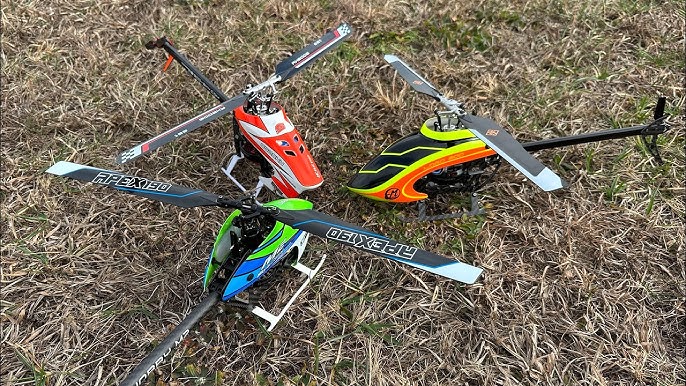
For decades, owning a micro-class 3D helicopter (anything under a 200-size rotor span) was a frustrating exercise in compromise. Pilots remember the era of brushed tail motors, sloppy plastic swashplates, fragile flybar linkages, and rudimentary gyros that drifted uncontrollably with minor temperature changes. Micro helicopters of yesteryear flew like hyperactive, twitchy insects-demanding lightning-fast thumb reflexes just to maintain a hover, let alone execute precise 3D maneuvers.
Today, that narrative has completely inverted. Driven by massive leaps in sensor technology, advanced 32-bit flight controllers, and precision manufacturing, modern micro and mini 3D helicopters offer flight characteristics, tracking authority, and stability that rival traditional 500-class machines. You no longer have to sacrifice precision for portability; pocket-sized 3D rigs now deliver locked-in performance right out of the box.
2. Manufacturing Purity: Tighter Tolerances and Modern Materials
The transformation of the micro helicopter class is rooted in manufacturing advancements. A decade ago, micro heli parts were plagued by loose mechanical tolerances-slop in the blade grips, excessive play in the swashplate bearings, and out-of-true main shafts that introduced high-frequency vibrations capable of confusing early MEMS gyros.
Today's production lines utilize high-precision CNC multi-axis milling, aerospace-grade aluminum alloys, and self-lubricating engineering polymers (like POM/Delrin). Tolerances are now measured in thousandths of a millimeter. Main shafts spin dead true, gear meshes are buttery smooth, and control linkages snap into place with zero mechanical slop. This mechanical purity ensures that every micro movement commanded by the servos translates instantly to the rotor blades without energy loss or hysteresis.
3. The Brains and the Brawn: Precision FBL & Direct Drive
Two major technological pillars define this modern renaissance:
- Precision Flybarless (FBL) Controllers: Modern micro flight controllers pack high-speed 6-axis IMUs and advanced PID-Feedforward algorithms (such as RotorFlight or proprietary micro-FBL units) into tiny boards. They actively compensate for torque torque-induced yaw, wind gusts, and mechanical imperfections in real-time.
- Brushless Direct-Drive Technology: Traditional gear-driven tails and main gears are increasingly being replaced by direct-drive outrunner motors. By mounting the main motor directly to the central shaft and using top-mounted direct-drive tail motors, manufacturers have eliminated gear stripping, backlash, mechanical drag, and concentricity issues entirely. The result is instant throttle response and silent, hyper-efficient power transfer.
4. Micro & Mini 3D Platform Comparison
To showcase how diverse and capable this market has become, let's examine five of the most prominent micro and mini 3D platforms currently dominating backyard and park flying sessions:
| Model | Configuration Type | Main Rotor / Blade Size | Power System | Flight Controller / Electronics | Notable Characteristics |
|---|---|---|---|---|---|
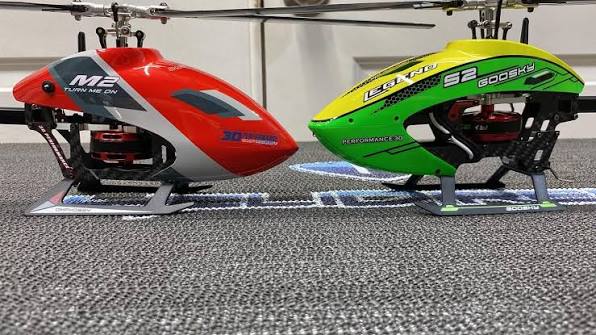
| GooSky S2 | Dual Brushless (Direct Tail) | ~330 mm span (110mm blades) | Dual brushless outrunners (Direct-drive tail) | GooSky FBL with Bluetooth tuning | Legendary durability, incredible tail authority for a micro, highly stable beginner-to-3D transition platform. |
| OMP Hobby M2 (EVO) | Dual Brushless (Direct Tail) | ~400 mm span (173mm blades) | Dual brushless motors | OMP Flight Controller (SFHSS / S.BUS compatible) | Unmatched pop and collective punch. Built like a mini tank with an aluminum frame chassis and exceptional crash survivability. |
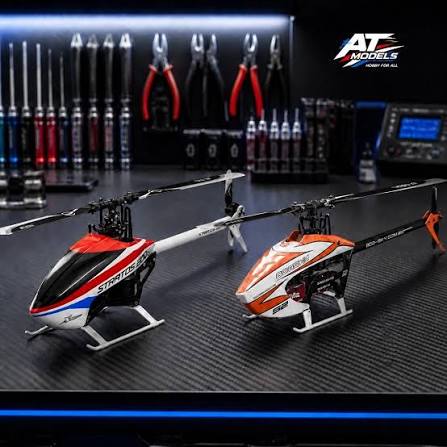
| XLPower Stratos 200 | Gearless Direct Drive / 1:1 Head | ~444 mm length (195mm blades) | Direct-drive brushless outrunner | Rotorflight / VBar / Universal FBL compatible | Brings true 700-class 1:1 control geometry and sacrificial grip protection into a micro-class package. Available in 2-blade and 3-blade editions. |
| Blade Infusion 210 | Traditional Torque-Tube / Belt Driven | 210 mm main blades (~465mm span) | Brushless main with belt-driven tail | Spektrum Safe / AS3X AR637T | Exceptional integration with Spektrum telemetry, offering full virtual panic recovery and big-heli presence in a 200-size footprint. |
| Mikado Logo 200 | Geared Main / Direct Tail | 200 mm main blades (~450mm span) | Brushless main with direct-drive tail motor | Mikado NEO VBar integration | Refined German engineering optimized specifically for the VBar control ecosystem. Incredibly smooth cyclic tracking and elite low-headspeed performance. |
5. Conclusion: Why Now is the Best Time to Fly Micro
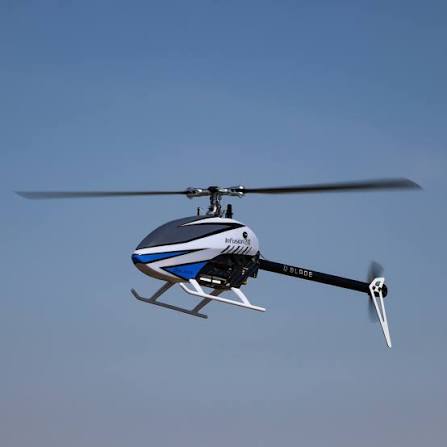
The gap between simulator flying and real-world 3D progression has never been narrower. Thanks to tight manufacturing tolerances, direct-drive simplicity, and sophisticated flight controller firmware, micro and mini helicopters like the Stratos 200 and GooSky S2 allow pilots to push their limits in local parks without needing a massive flight line or hauling heavy battery chargers. They are true precision instruments packaged in the palm of your hand.