RotorFlight v2.3 vs. Proprietary FBL: Is Open-Source Finally Killing High-End Proprietary Flight Controllers?
For decades, the high-end 3D radio-controlled helicopter market operated under a strict proprietary model. If you wanted elite, locked-in flight performance on a 500-class or 700-class machine, your choices were clear: drop $300 to $500 on closed-source, polished hardware ecosystems like **Spirit Pro, Mikado VBar NEO, or Microbeast PLUS**. These units offered a "plug-and-play" promise—plug them in, follow a wizard, tweak a few gain sliders, and go fly.
Then came **RotorFlight**. Built on the shoulders of the open-source Betaflight multirotor architecture, RotorFlight has exploded across the RC helicopter community. With the major release of **RotorFlight v2.3**, the open-source flight controller movement has transitioned from a risky niche experiment into a dominant technological powerhouse. Today, the hobby is locked in one of its most passionate debates: **Open-source multi-threading flexibility versus closed-source simplicity.**
1. The Rise of RotorFlight v2.3: Why the Hype is Real
RotorFlight changed the game by bringing advanced multirotor-style telemetry, high-speed PID-Feedforward control loops, and granular blackbox logging directly to single-rotor helicopters. Unlike legacy FBL units that abstract away the math behind simple configuration menus, RotorFlight gives pilots absolute, bare-metal control over every microsecond of the control loop.
Key drivers behind RotorFlight's rapid adoption include:
- Unprecedented Blackbox Logging: Operating at sample rates up to several kilohertz, RotorFlight’s blackbox logging allows pilots to inspect micro-vibrations, gyro noise, servo latency, and PID performance frame-by-frame on their PC using RotorFlight Configurator.
- Dynamic Filter Architecture: Inherited from Betaflight's advanced RPM filter and dynamic notch filtering, RotorFlight can actively hunt down and neutralize mechanical harmonics and motor noise in real time, resulting in a cleaner, more connected stick feel.
- Advanced Governor Integration: The built-in ESC governor features exceptional headspeed recovery and precise rotor load tracking that rivals or beats dedicated nitro and electric hardware governors.
- Hardware Cost vs. Performance: Running on powerful, low-cost STM32 H7 and F7 microcontroller boards (such as Matek or Flywoo hardware), pilots get bleeding-edge computing power for a fraction of the cost of a proprietary ecosystem.
2. Proprietary Ecosystems: The Case for Plug-and-Play
Despite the explosive growth of open-source flight controllers, proprietary units like Spirit and VBar retain a massive, loyal following. Why do many veteran 3D pilots refuse to switch? It comes down to time, support, and predictability.
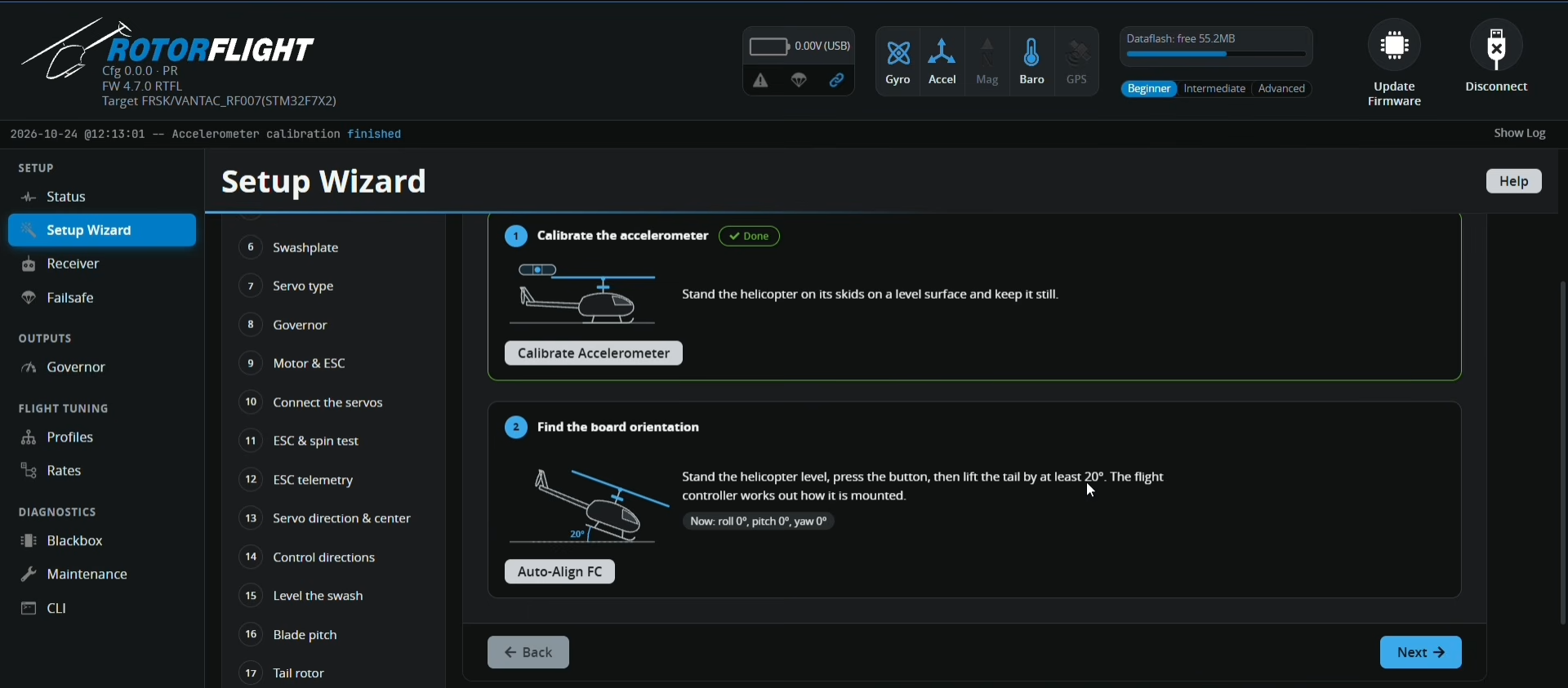
- Streamlined Setup Wizards: Proprietary units are engineered for pilots who want to spend their weekends flying, not debugging firmware or mapping serial ports in a command-line interface (CLI). Their setup wizards guide you safely from mechanical setup to maiden flight in under an hour.
- Ecosystem Integration & Rescue: Systems like the Spirit Pro or VBar feature world-class, heavily tested "rescue/panic" recovery modes out of the box. While RotorFlight has made massive strides in rescue functionality, proprietary units have years of real-world bailout refinement behind them.
- Dedicated Customer Support: When you buy a proprietary system, you are paying for direct manufacturer support, comprehensive documentation, and structured firmware updates that have been exhaustively tested by factory pilots before public release.
3. Head-to-Head Comparison: Open-Source vs. Proprietary
| Feature / Metric | RotorFlight v2.3 (Open-Source) | Proprietary FBL (Spirit / VBar / Microbeast) |
|---|---|---|
| Hardware Cost | Low to Moderate ($60 – $150 for STM32 FC boards) | High ($250 – $500+ for unit + software licenses) |
| Tuning Depth & Customization | Limitless (Granular PID-F, filters, mix rates, CLI access) | Moderate-to-High (Restricted to manufacturer-approved sliders) |
| Diagnostic Tools | Elite (High-speed multi-kHz blackbox data logging) | Basic-to-Moderate (Varies by brand; often requires separate telemetry modules) |
| Learning Curve | Steep. Requires understanding control theory, filtering, and CLI commands. | Gentle. Guided software wizards and intuitive desktop/mobile apps. |
| Community & Firmware Updates | Rapid, community-driven development cycle with frequent feature drops. | Controlled, stable corporate release cycles. |
4. The Biggest Community Debates
If you visit forums like HeliFreak or Reddit's RC aviation communities, discussions surrounding open-source flight controllers usually boil down to three main friction points:
- Configuration Hurdles & Arming Logic: Multi-rotor software relies heavily on safety arming states, switch configurations, and throttle kill checks. For traditional helicopter pilots accustomed to simply flipping a receiver switch, mastering RotorFlight's arming flags and logic conditions can feel intimidating.
- The "Tuning Rabbit Hole": Because RotorFlight gives you the power to adjust dynamic yaw torque compensation, feedforward weights, and PID gains down to the decimal point, pilots can easily over-tune their machines. A bad filter setup can lead to hot servos and mysterious oscillations.
- The Hacker Appeal: For tech-savvy engineers, systems administrators, and tinkerers who love deep-diving into code and telemetry graphs, proprietary FBL units feel like a closed black box. They want the freedom to flash custom configurations, integrate custom sensors, and push their hardware to the absolute bleeding edge.
Conclusion: Which Philosophy Wins?
Is open-source killing proprietary flight controllers? Not entirely—instead, it is forcing the entire industry to adapt. Proprietary manufacturers are feeling the pressure to offer more telemetry, faster processing speeds, and deeper tuning visibility.
If your goal is to unbox a unit, follow a simple wizard, and have a reliable, locked-in 3D helicopter in the air by Saturday afternoon, a high-end proprietary unit remains an exceptional choice. But if you view your helicopter as an advanced flying lab—where absolute tuning control, blackbox diagnostics, and open-source flexibility matter most—**RotorFlight v2.3** represents the pinnacle of modern RC helicopter engineering.