Advanced UAV Architecture: Autopilots, GCS Logic, and Networked Companion Computing
Modern autonomous unmanned systems require an integration of low-level real-time embedded flight control firmware, robust ground control station (GCS) telemetry pipelines, and high-level edge compute modules. For advanced systems engineers and technicians, moving beyond out-of-the-box setup involves understanding the internal communication topologies, firmware mechanics, and remote programmatic injection vectors that govern autonomous flight.
1. The Core Autopilots: PX4 Pro vs. ArduPilot Firmware Architecture
At the center of any advanced drone is the flight control unit (FCU) running open-source real-time firmware. The two dominant ecosystems—PX4 Pro and ArduPilot—take fundamentally different architectural approaches to vehicle management.
- PX4 Pro: Built around the NuttX RTOS micro-kernel architecture, PX4 utilizes a modular, POSIX-compliant design framework. Its inter-process communication relies on uORB (Micro Object Request Broker), an asynchronous publish-subscribe messaging bus. This decoupled architecture allows individual flight tasks (such as attitude estimation, sensor drivers, and navigation algorithms) to run as isolated processes, making PX4 heavily favored in industrial, academic, and commercial robotics environments.
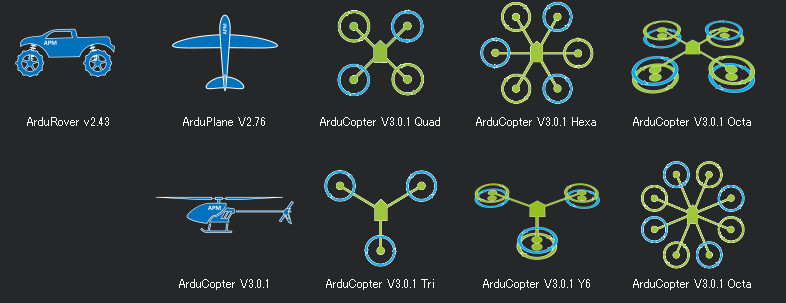
- ArduPilot (ArduCopter/Plane/Rover): Operating on a monolithic yet highly optimized C++ architecture, ArduPilot features a Hardware Abstraction Layer (HAL) that separates hardware-specific drivers from core flight logic. It runs on a deterministic, scheduler-driven loop structure that executes tasks at fixed loop rates (e.g., 400Hz for motor mixing and attitude loops). ArduPilot is exceptionally feature-rich, offering native support for a massive array of auxiliary sensors, payloads, and fail-safes out of the box.
2. Controller UIs: Mission Planner & QGroundControl as Management Layers
Flight controllers require external interfaces to configure their vast parameter matrices, calibrate sensors, define complex geofenced mission profiles, and monitor real-time telemetry streams. Mission Planner and QGroundControl (QGC) act as the primary GCS management layers.
GCS Role: Neither GCS calculates real-time attitude stabilization—that computational burden is handled strictly on the bare-metal FCU. Instead, GCS applications translate user intent into structured MAVLink commands, process telemetry logs, and execute pre-flight calibration sequences.
- Mission Planner: Predominantly a Windows-centric utility optimized heavily for the ArduPilot ecosystem. It exposes thousands of low-level parameters, advanced PID tuning grids, pre-flight vibration analysis tools (FFT log analysis), and complex polygon-based automated survey mapping frameworks.
- QGroundControl: A cross-platform (Linux, Windows, macOS, Android, iOS) Qt-based application designed natively around the MAVLink protocol. While it supports ArduPilot, QGC is the reference GCS for PX4. It features a streamlined, touch-friendly UI optimized for field deployment, offering visual parameter search, firmware flashing utilities, and real-time MAVLink inspector trees.
3. Hardware Interfacing: UARTs, Serial Telemetry, and Companion Computers
To scale a drone from manual radio-controlled flight to fully autonomous, network-driven operations, you must interface the FCU with a companion computer (such as a Raspberry Pi running Linux). This communication bridge relies on hardware serial interfaces (UARTs).
Flight controllers expose multiple serial ports (e.g., TELEM1, TELEM2, SERIAL4). To connect a Raspberry Pi:
- Wiring: Cross-connect the UART lines: Flight Controller
TXto Raspberry PiRX(GPIO 15 //dev/ttyAMA0), FCRXto PiTX(GPIO 14), and commonGND. (Never bridge 5V power rails directly from the Pi to the FC unless powering via an isolated regulator architecture). - Baud Rate Synchronization: Configure the serial port baud rate identically on both ends (typically
921600or460800baud to handle high-frequency MAVLink telemetry streams). - MAVProxy Routing: On the companion Pi, running a MAVLink router like
MAVProxyallows the serial stream to be split, forwarding packets locally to Python scripts while concurrently tunneling telemetry over a network socket.
4. Network Architecture: Cellular Teleoperation and Remote Ingestion
By mounting a mobile broadband hotspot or cellular modem (such as a 4G LTE/5G USB dongle or tethered hotspot) to the Raspberry Pi, the drone ceases to be bound by local line-of-sight radio telemetry links.
Remote Network Setup:
- Dynamic IP & Carrier NAT Mitigation: Because cellular carriers use CGNAT (Carrier-Grade NAT), direct inbound SSH connections to the drone are blocked. Technicians bypass this by establishing an out-of-band persistent VPN (such as WireGuard) or a reverse SSH tunnel routed through a public cloud VPS (Virtual Private Server).
- Remote Login & Control: Technicians can SSH into the Raspberry Pi over the internet from anywhere in the world, monitoring system processes, checking CPU temperatures, and managing Python daemon scripts executing flight commands.
5. Python-Driven Autonomy: Libraries and Command Injection
Once the companion Pi has a stable bi-directional MAVLink link to the flight controller over UART, Python scripts running on the Linux environment can inject commands, override RC channels, and manipulate vehicle state machines programmatically.
Three primary Python libraries facilitate this interaction:
pymavlink: A low-level, high-performance MAVLink message serialization and parsing library generated from XML protocol definitions. It allows direct packet manipulation, custom command injection, and raw telemetry byte-stream inspection. Ideal for advanced scripters requiring cycle-accurate message handling.- DroneKit-Python: A higher-level abstraction library built on top of MAVLink. It abstracts vehicle state into object-oriented models (`vehicle.location`, `vehicle.attitude`), simplifying waypoint navigation, velocity vector commands, and mode switching. *(Note: Maintenance has transitioned largely to community forks, but its design patterns remain foundational).*
- MAVSDK-Python: The modern, asynchronous (gRPC-based) SDK primarily built for PX4. It communicates with a companion binary called
mavsdk_server, offering clean async/await Python syntax for controlling drone actions, managing geofences, and streaming telemetry streams with maximum safety guarantees.
Example Code Snippet: MAVLink Command Injection via pymavlink
from pymavlink import mavutil
          import time

          # Establish connection to Flight Controller over UART serial port
          master = mavutil.mavlink_connection('/dev/ttyAMA0', baud=921600)

          # Wait for the first heartbeat message to establish valid link state
          master.wait_heartbeat()
          print(f"Connected to system (ID: {master.target_system}, Component: {master.target_component})")

          # Command the vehicle to arm motors
          master.mav.command_long_send(
              master.target_system,
              master.target_component,
              mavutil.mavlink.MAV_CMD_COMPONENT_ARM_DISARM,
              0,
              1, # 1 to arm, 0 to disarm
              0, 0, 0, 0, 0, 0
          )

          print("Arming command sent via Python UART injection.")
Article authored for advanced infrastructure engineers, robotics integrators, and systems technicians deploying customized autonomous flight stacks.