Explore the iconic lineage that revolutionized electric 3D remote-controlled helicopters from its humble belt-driven beginnings to modern 6S high-performance dominators.
Mid-2000s
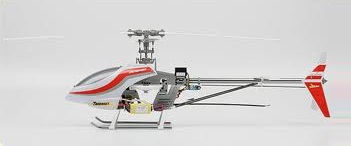
#01 / Classic
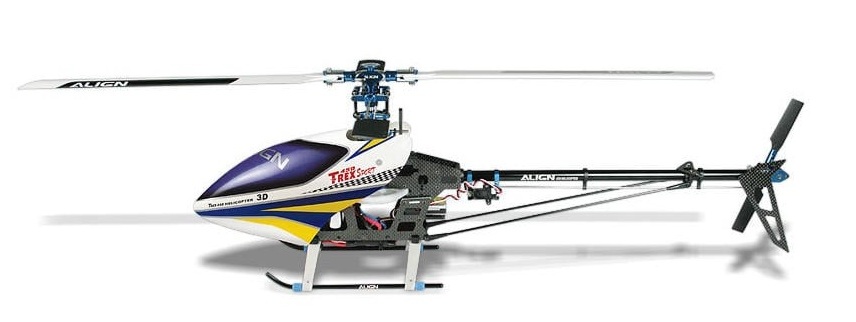
T-Rex 450 X / XL
The Pioneers that Started the Electric 3D Revolution
The models that started it all. Featuring plastic frames, a belt-driven tail, and heavy reliance on brushed or early brushless setups. The XL extended the boom slightly to accommodate larger blades and improve stability.
Plastic / Glass fiber frame structure
Belt-driven tail system
Early mechanical flybar head
Blade Size: 315mm - 325mmCategory: Original
2006-2008
#02 / Upgraded
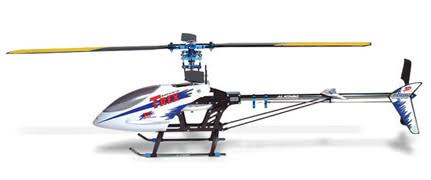
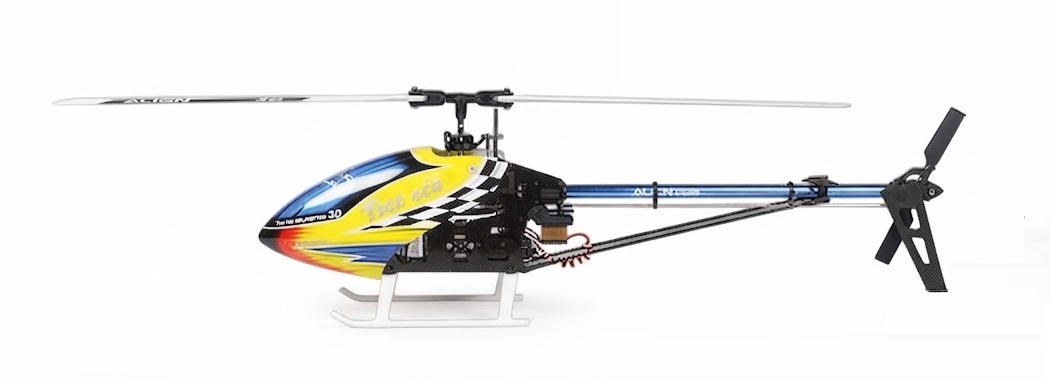
T-Rex 450 SE / SE V2
Special Edition CNC Aluminum & Carbon Fiber Upgrades
A massive leap forward in quality and aesthetics. The SE introduced CNC-machined aluminum upgrade parts and rigid carbon fiber side frames, transforming the 450 class from a trainer into a precision 3D machine.
Released as a cost-effective alternative to the SE. It retained high flight performance while substituting expensive aluminum frame parts for durable glass-fiber frames and reinforced plastics.
Durable glass-fiber side frames
Cost-effective plastic composite parts
Retained SE rotor head geometry
Blade Size: 325mmCategory: Economy
2008-2011
#04 / Torque Tube
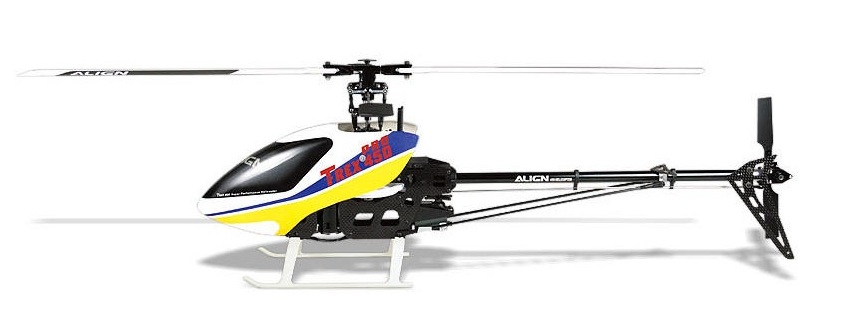
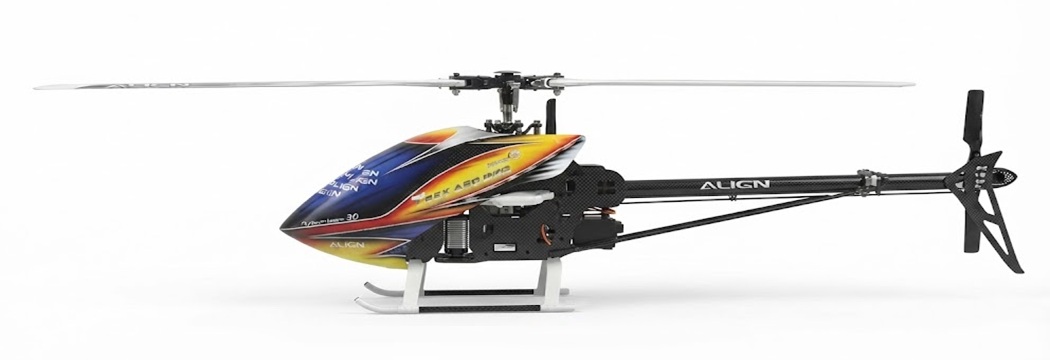
T-Rex 450 Pro / Pro V2
Complete Ground-Up Redesign with Shaft-Driven Tail
Abandoned the belt tail for a torque-tube (shaft-driven) tail system, integrated a centralized low-CG motor mount, and packed servos inside a tight triangular layout within narrower carbon frames.
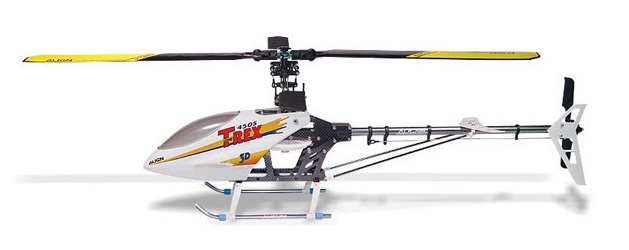
Align's counterpart to the Pro series, retaining the belt-driven tail system (favored by pilots flying in dusty environments where torque-tube gears could strip) and wider frames for easier electronics installation.
Aimed squarely at beginners and intermediate pilots. Sold as RTF/ARTF packages bundled with radios. The later Plus DFC variant introduced Align's low-profile flybarless head and simple onboard stabilization.
The evolution of the Pro V2 integrated with Align's DFC rotor head. DFC lowered the swashplate drastically to reduce mechanical link height, giving the heli an extremely crisp cyclic response and sleek aerodynamic profile.
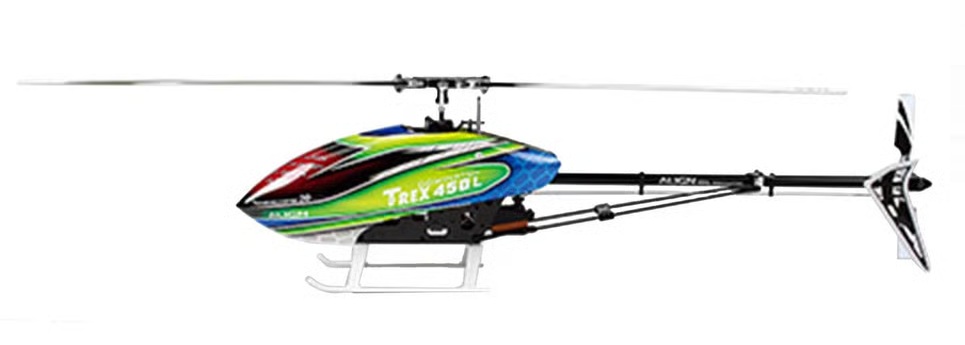
A revolutionary departure from traditional 450s, stretched to accept 360mm main blades and powered by a 6S LiPo system (460MX 1800KV motor). Integrated composite side frames mirror full-scale 700-class layouts.
Stretched to 360mm main blades
High-voltage 6S LiPo power system
Battery tray latching frame integration
Blade Size: 360mm (6S)Category: Dominator
T-Rex 450 - Drive Train Details
Compatibility Notice: Mixing gear modules can cause catastrophic stripouts. Early generations (X through early Pro) use Mod 0.5 gear geometry, whereas later high-torque variants (Pro V2, DFC, 450L Dominator) utilize stronger Mod 0.6 gear geometry. Always verify that your main gear and motor pinion pitch match identically.
1. Master Drivetrain Specification Table
Model / Variation
Main Gear Spec
Stock Pinion Spec
Tail Drive Type & Ratio Details
T-Rex 450 X / XL (Original)
150T (Mod 0.5, Straight Cut)
11T or 13T (Mod 0.5)
Belt Drive (Front Pulley: ~23T, Rear Pulley: ~13T)
T-Rex 450 SE / SE V2
150T (Mod 0.5, CNC Upgraded)
13T (Standard stock for 3S setup)
Belt or Torque Tube options (Front bevel: 20T, Tail bevel: 10T, 2:1 ratio)
T-Rex 450 Pro (Original / V1)
150T (Mod 0.5, Helical / Straight options)
14T (Mod 0.5)
Torque Tube (Front crown: 15T, Tail bevel: 11T)
T-Rex 450 Pro V2 / DFC
121T (Mod 0.6, Helical / Stronger Tooth Profile)
11T (Mod 0.6)
Torque Tube (Front crown: 13T, Tail bevel: 10T)
T-Rex 450L Dominator (6S Setup)
121T (Mod 0.6, Heavy Duty)
11T or 12T (Mod 0.6)
Torque Tube (Front crown: 13T, Tail bevel: 10T)
2. Engineering Evolution & Gear Module Breakdown
From Mod 0.5 to Mod 0.6
The early 450 ecosystem (ranging from the classic wooden-blade 450X up to the aluminum SE V2 and early Pro V1) relied on a fine 0.5 module pitch paired with a large 150-tooth main gear. While efficient, these fine teeth were prone to stripping under sudden pitch pumps or botched autorotations.
With the introduction of higher-output outrunners and rigid DFC (Direct Flight Control) heads, Align transitioned the architecture to a chunkier 0.6 module pitch featuring a 121-tooth main gear. This drastically increased root-tooth thickness, easily absorbing the torque spikes common in modern 3S and 6S power setups.
3. Tail Drive: Belt vs. Torque Tube
Belt Systems (X, XL, early SE): Highly forgiving during tail strikes; absorbs shock loads well, though requires regular tension checks and is susceptible to static buildup if not properly grounded.
Torque Tube Systems (Pro, DFC, 450L): Zero stretch and crisp, direct tail authority with no belt lag. However, hard ground strikes can strip front crown gears or rear tail bevel gears, requiring careful mesh inspection during rebuilds.
Pro DFC Builder's Tip: If you are rebuilding or tuning a Pro DFC variant, pay close attention to your motor shaft diameter (typically standard 3.177 mm / 1/8 inch, though some upgraded scorpion or high-power motors use 3.5 mm). Ensure your Mod 0.6 pinion setscrew is secured with high-strength threadlocker (such as Loctite 271 or equivalent) on a clean, flat-ground motor shaft spot.
4. Summary & Quick Reference
Understanding your specific sub-generation ensures you never accidentally purchase Mod 0.5 pinions for a Mod 0.6 121T main gear. Keep this dossier handy on the bench when changing motor ratios to dial in head speed versus current draw for your preferred flight style.