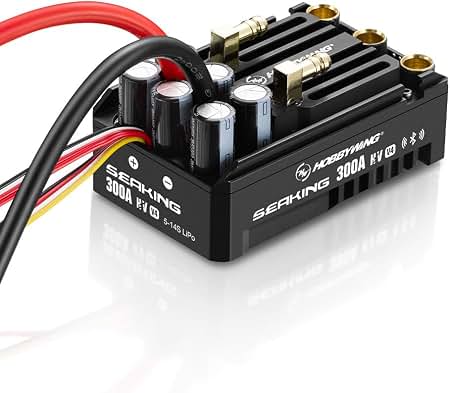
If your Align T-Rex 450 is stuttering, cogging, or struggling during initial spool-up on a Hobbywing 25A ESC, **lowering your timing from 25° down to 15° (or even 10°-12°)** is highly recommended[cite: 98]. High timing advances the commutation pulse too far ahead, which often causes sensorless brushless ESCs to misread Back-EMF at low RPMs[cite: 98].
1. The Problem With 25° Timing at Startup
At 25° timing, the ESC fires electrical pulses very early relative to rotor position[cite: 98]. While this provides top-end power, sensorless ESCs rely entirely on Back-EMF voltage generated by the spinning motor to detect rotor position[cite: 98].
- Low Back-EMF Signal: At zero or low RPM, Back-EMF is practically zero[cite: 98]. High timing makes it even harder for the ESC to determine where the motor magnets are[cite: 98].
- Commutation Loss (Cogging): The ESC fires the wrong coil at the wrong microsecond, causing the motor to stutter back and forth instead of turning smoothly[cite: 98].
- Heat & Current Spikes: High timing increases initial current draw dramatically without yielding mechanical torque during the startup phase[cite: 98].
2. Recommended Setup Adjustments
| Setting | Current Value | Recommended Value | Why Change It? |
|---|---|---|---|
| Timing | 25° | 12° – 15° (Medium) | Provides cleaner Back-EMF detection and smoother startup commutation[cite: 98]. |
| Startup Mode | Standard / Fast | Very Soft / Soft | Gradually ramps voltage to give the rotor momentum before applying load[cite: 98]. |
| PWM Frequency | 8kHz / Auto | 12kHz – 16kHz | Smooths out low-RPM drive signals for high-KV 450 motors[cite: 98]. |
3. Beyond Timing: Check Thermal and Mechanical Load
While lowering timing to 15° is the primary software fix[cite: 98], a 25A ESC on a 450-size helicopter is running close to its operational limit during startup. Keep the following in mind:
- Main Gear Mesh: Ensure the motor pinion mesh isn't set too tight against the main gear[cite: 98].
- One-Way Bearing & Belt: Check that the drive train and tail belt/torque tube spin freely by hand without mechanical drag[cite: 98].
- Bullet Connectors: Cold solder joints or loose bullet connectors between the ESC and motor cause single-phase dropouts that mimic timing failure[cite: 98].
4. Summary Verdict
Yes, lower your timing to 15°. This single change will improve initial phase sync, reduce startup hesitation, and lower overall ESC heat[cite: 98]. If soft-start remains rough after adjusting timing and verifying free gear movement, upgrading to a 40A or 50A Hobbywing ESC will provide the necessary current margin and smoother spool-up algorithms required for 450-class collective pitch helis[cite: 98].