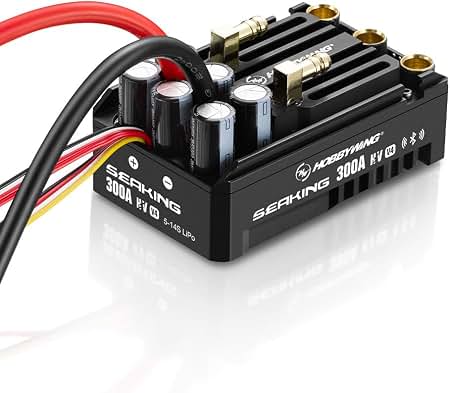
Digital ESCs (DSHOT) vs PWM ESCs - Protocol, Performance, and Empirical Differences
1. Overview
In RC helicopters, multirotors, and airplanes, the link between the flight controller (or governor) and the ESC is as critical as the ESC hardware itself. Historically, this link has been a simple analog PWM pulse, used by brands like Kontronik, Castle, Hobbywing, and many others. Modern digital ESCs, especially those using DSHOT, replace that analog pulse with a checksum-verified bitstream.
This article compares digital ESC protocols (DSHOT and similar) with traditional PWM-style ESC control, focusing on protocol speed, signal integrity, empirical behavior, and performance benefits in real RC applications.
2. Protocol Fundamentals
2.1 PWM ESC Control (Kontronik, Castle, Hobbywing, etc.)
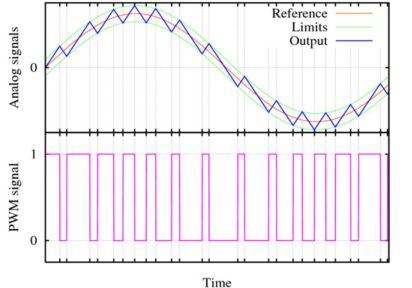
PWM-based ESCs encode throttle as an analog pulse width. The flight controller or receiver sends a voltage pulse; the ESC measures how long the pulse stays high and maps that duration to a throttle command. Typical ranges:
- Standard PWM: ~50-490 Hz update rate, 1000-2000 μs pulse width.
- Heli governors and airplane ESCs: often operate in the same 50-400 Hz region, tuned for smoothness rather than ultra-low latency.
Advantages include broad compatibility and simplicity. The downside is that the signal is analog: any noise, ground loop, or wiring issue directly distorts the pulse width, and the ESC has no way to know the command was corrupted.
2.2 Digital ESC Control (DSHOT and Related Protocols)
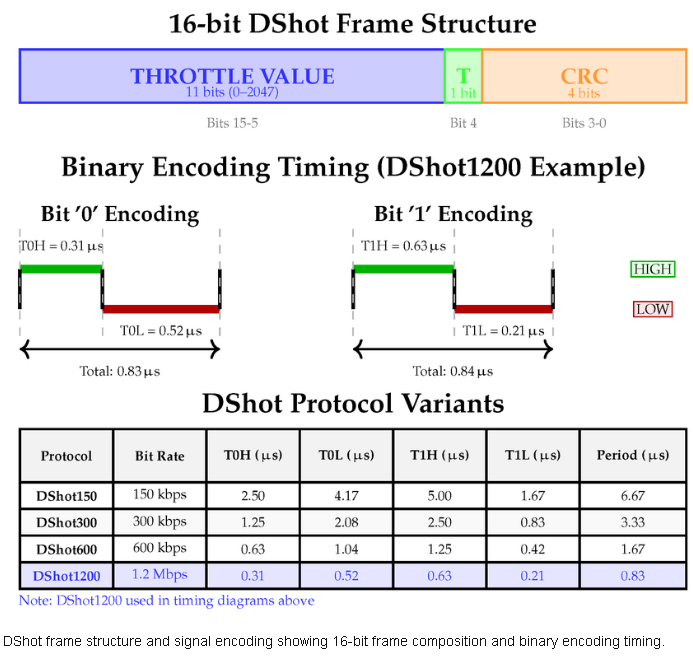
Digital protocols like DSHOT send a binary frame instead of an analog pulse. A typical DSHOT frame is 16 bits:
- 11 bits: throttle value (0-2047, 2048 discrete steps).
- 1 bit: telemetry request flag.
- 4 bits: CRC checksum.
The ESC decodes the frame; if the CRC fails, the ESC discards the command and holds the last valid throttle. This is the core difference: analog PWM mistakes noise for a throttle change, while DSHOT detects noise and ignores it.
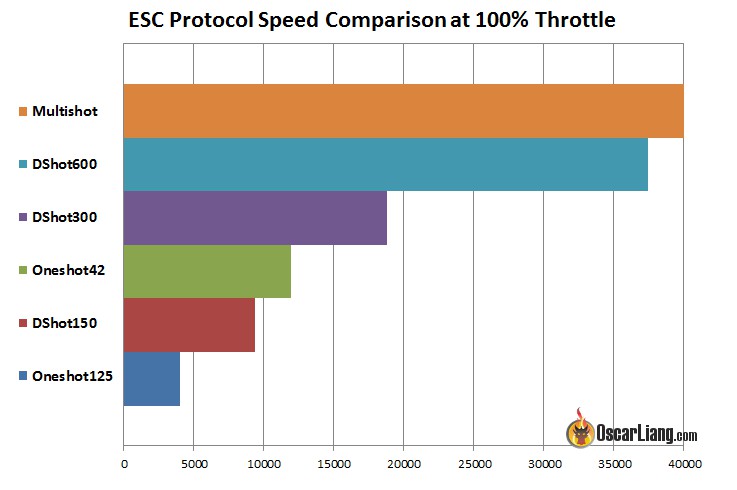
Common DSHOT speeds:
- DSHOT150 - entry-level digital, suitable for older hardware.
- DSHOT300 - widely supported, good balance of speed and robustness.
- DSHOT600 - default for most modern multirotors and many digital heli setups.
- DSHOT1200 - ultra-fast, used where latency is critical and hardware supports it.
3. Summary Table - Digital vs PWM ESC Protocols
| Aspect | PWM ESCs (Kontronik / Castle / Hobbywing) | Digital ESCs (DSHOT, etc.) |
|---|---|---|
| Signal Type | Analog pulse width (1000-2000 μs) | Digital bitstream (16-bit frame with CRC) |
| Typical Update Rate | 50-490 Hz (heli/airplane ESCs often 50-400 Hz) | Up to tens of kHz effective (DSHOT300/600/1200) |
| Resolution | Limited by pulse width granularity and ESC timing (~100-1000 effective steps) | 2048 discrete throttle steps (11-bit value) |
| Error Detection | None - noise becomes a different throttle value | CRC checksum - corrupted frames are discarded |
| Calibration | Requires endpoint calibration (min/max throttle) | No traditional endpoint calibration; values are digital and fixed |
| Telemetry / RPM Feedback | Vendor-specific (e.g., Kontronik telemetry) but not tied to the throttle signal itself | Bidirectional DSHOT can return RPM and telemetry on the same link |
| Noise Sensitivity | High - wiring, EMI, and ground loops directly distort pulse width | Low - frame is either valid or discarded; no "slightly wrong" throttle |
| Use Cases | Scale helis, airplanes, legacy systems, industrial ESCs | High-performance multirotors, modern helis, systems needing RPM filtering |
| Setup Complexity | Simple conceptually, but calibration and noise mitigation can be tricky | Requires compatible ESC/FC, but once enabled, setup is repeatable and robust |
4. The Empirical Differences
4.1 Latency and Loop Utilization
With PWM at 50-400 Hz, the ESC sees new throttle commands every 2.5-20 ms. In a modern flight controller running PID loops at 1-8 kHz, many calculated corrections never reach the ESC in time; the aircraft flies on "stale" data.
DSHOT300/600, by contrast, can deliver commands at tens of kHz. The ESC receives nearly every PID update, which translates to tighter tracking of attitude and more precise response to disturbances. In multirotors, this shows up as cleaner prop wash handling and more consistent feel across throttle ranges. In helis, it manifests as more stable headspeed control and more predictable cyclic response during aggressive maneuvers.
4.2 Noise, Desyncs, and Low-Throttle Behavior
Analog PWM is most vulnerable at low throttle. A small amount of noise that adds or subtracts a few microseconds from the pulse can represent a large percentage change in commanded throttle near idle. This is why PWM systems sometimes stutter or "hunt" at low throttle, especially in noisy installations or long wiring runs.
Digital DSHOT frames either pass CRC or they don't. A noisy environment may cause occasional frame drops, but the ESC simply holds the last valid command instead of executing a wrong one. Empirically, this reduces random motor twitches, desyncs on punch-outs, and unexplained oscillations that are otherwise blamed on PID tuning.
4.3 Calibration Drift and Fleet Consistency
PWM ESCs require throttle endpoint calibration. Over time, or across different transmitters and flight controllers, these endpoints can drift. Two aircraft built "the same way" may not behave identically because their ESCs interpret the same pulse width differently.
DSHOT removes endpoint calibration as a variable. A throttle value of 1024 means the same thing on every ESC that implements the protocol correctly. For fleets of drones or multiple helis in a training environment, this improves repeatability and simplifies maintenance.
5. Performance Benefits
5.1 RPM Filtering and Advanced Control
Bidirectional DSHOT allows the ESC to send motor RPM back to the flight controller. The FC can then apply RPM-based notch filters that track actual motor frequencies in real time. This dramatically improves noise rejection and allows higher PID gains without oscillation.
PWM ESCs can support telemetry via separate wires or vendor-specific protocols, but the throttle signal itself carries no feedback. RPM filtering, if available, is usually less integrated and more dependent on external sensors.
5.2 Headroom for Aggressive Tuning
With digital ESC control, the combination of higher update rates, error detection, and RPM feedback gives tuners more headroom. You can push PID gains, feedforward, and dynamic filters further before hitting instability.
In helis, this means crisper cyclic response and more locked-in tail behavior. In multirotors, it means better tracking through prop wash and more consistent feel across battery voltages and load conditions.
5.3 Reliability Under Stress
High-current events-hard collective punches on a heli, full-throttle climbs on a quad-generate significant EMI. Analog PWM can misinterpret this noise as throttle changes, leading to desyncs or unexpected behavior exactly when the system is under maximum stress.
Digital DSHOT's CRC and frame-based design make it far more resilient in these conditions. Even if a frame is lost, the ESC holds the last valid command, which is usually safer than executing a random throttle value.
6. Caveats and Practical Considerations
6.1 When PWM Still Makes Sense
- Legacy ESCs and governors that only support PWM.
- Scale helis and airplanes where ultra-low latency is less critical than smooth, predictable behavior.
- Industrial or specialized ESCs where PWM is the documented, supported interface.
6.2 Requirements for Digital ESCs
- Flight controller and ESC must both support DSHOT or the chosen digital protocol.
- Firmware configuration must be correct (protocol selection, bidirectional enable, filter setup).
- Wiring and power design still matter; digital is more robust, not invincible.
6.3 Mixed Environments
In some RC heli and airplane setups, you may run PWM for the main ESC (e.g., a Kontronik or Castle governor) while using digital protocols for auxiliary systems (multirotor-style ESCs, tail drives, or separate drones). Understanding the strengths and limitations of each protocol helps you choose where digital control brings real benefit and where PWM remains acceptable.
7. Conclusion
Digital ESC protocols like DSHOT represent a fundamental shift from analog pulse-width control to checksum-verified digital communication. For high-performance multirotors and modern helis, the combination of higher update rates, error detection, and RPM feedback delivers measurable improvements in responsiveness, stability, and repeatability.
PWM ESCs-Kontronik, Castle, Hobbywing, and similar-remain viable and often ideal in applications where compatibility, smoothness, and proven behavior matter more than cutting-edge control features. The key is understanding what each protocol actually does, then matching it to the aircraft, the environment, and the level of performance you're aiming for.